A student wrote to me about a grade they got in my Foundations of Anthropology class (ANTH 401). This student was not happy that they received a 'C' as a grade with a 79% average since they have desires to go to graduate school. At first I was going to not reply at all since there really isn't much I can do about grades unless I've made a mistake somewhere (which was not the case here). In the end I replied with some advice. In case this will help other students, I repeat it here.
I understand your frustration with the grade - you were close - but I had to do a cut off somewhere that was consistent with everyone else. Thus, you just barely didn't make the next grade. There isn't really anything I can do to change that unless I made a math error somewhere.
If you are interested in going on to grad school, your grades are not the only thing that is going to make a difference. More important than grades are going to be (1) letters of reference (2) projects/papers/presentations that you have done (3) GREs (for most schools). Individual grades can be 'explained' in statements of purpose. The other material, however, makes a huge difference to committees reviewing materials. So here is what I suggest:
(1) start working with a faculty member who is in the area you would like to focus on for graduate school. This will help get you a good letter of recommendation. Take the initiative here -- volunteer to do some aspect of a research project that the faculty member is working. Do this work in your spare time to get the experience and background you need to be a good grad school candidate. What area are you hoping to focus on? I can direct you in the right direction - to the right person...
(2) Find out if you can turn that project into a paper or poster for a national meeting (or regional). I can help you identify a conference that would work well for that - there are many different conferences.
(3) Begin preparing for GREs now - even you are taking them in the fall. The more familiar you are with the kind of questions that the GRE consists of, the better you will do. Take a tutoring class on the GREs if necessary -- sometimes it helps to have some structure to that kind of studying since it is easy to blow off on your own.


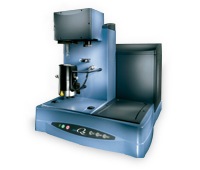 The Q50 is a nice little TGA. Completely controlled via Windows (man, I do not miss the SCO Unix OS and software that ran on the Perkin Elmer TGA we had back at the U.W.) with a nice 1gm maximum sample size and a furnace that covers 0-1000 degrees C. My primary impetus for purchasing the TGA is for determining firing temperatures on prehistoric ceramics to see how this factor may impact rehydroxylation processes. From my initial test of a Mississippian sherd from Arkansas (Rose Mound), the unit will be ideal -- I got a clear signal at ca. 610 degree C that showed a massive loss of weight that is the result of additional firing of the clay beyond the original firing temperature. I'll be running more tests, of course. And I need to do some work on the various exceptions of clay composition and firing effects.
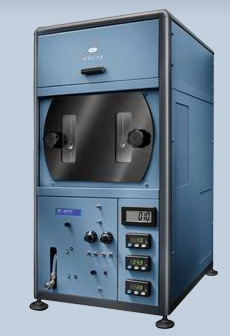 The vapor sorption analyzer is a 1950s looking machine but has a solid Windows based interface for doing all of the actual work. Basically it consists of an ultra balance with two sample holders that are suspended in a finely controlled temperature and humidity environment. For our purposes, much of the ability (to change temp and humidity in a dynamic way) of the VTI-SA are overkill since our use basically consists of making mass measures in a constant temperature and humidity -- but the precision of this instrument will give us an ability to explore some of the boundaries of the overall method. We are now working on our measurement protocols so we can start running sherds -- Ill probably go in tomorrow to start a run. Can't wait...