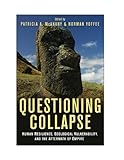
Author Mark Lynas (The God Species: How the planet can survive the age of humans, Six Degrees, High Tide) recently posted a discussion of The Statues That Walked on his blog (www.marklynas.org) -- The myth of Easter Island’s ecocide. In his essay, Lynas agrees with the basis of our research and concludes:
Like all of us, modern Easter Islanders are inter-dependent with the rest of the world. Perhaps the more recent studies of their history will help challenge the Hobbesian and pessimistic view that human nature necessarily tends towards destruction and violence. Resilience and sustainability are just as likely outcomes, even over the longer term. This, I think, is the true lesson of Easter Island.
His essay states, as we do in TSTW, that ecocide - at least on Easter Island - is a myth and that the evidence contradicts claims made by Jared Diamond (and others). Interestingly, Jared Diamond (Collapse, Guns, Germs and Steel) chose this forum as a platform to argue against our research and conclusions. Diamond's letter to Mark's posting is posted in full here. Below is our response to Diamond's comments. We have cross posted this here and on Mark Lynas' blog. Enjoy!
-----------------------------------------------------------------------------------------------------------------------------------------------------------------
Diamond attempts to defend myths of Easter Island: Lipo and Hunt respond
We are hardly surprised that Jared Diamond would write that we are “transparently wrong” about Easter Island. He has a vested interest in defending his “ecocide” storyline published back in 1995 in Discover Magazine and again in his bestselling book Collapse. We acknowledge that Diamond has much at stake here. But so do the Easter Islanders. So too does the field of archeology. And so too does the truth.
Diamond’s thesis about what happened on Easter Island is not new, building as it did on presumptions originally offered by the first Europeans to set foot on the island in the early 18th century. Sadly, this thesis was not challenged because it so conveniently confirmed 18th century prejudice about superior (European) and inferior (everyone not European) societies. Thor Heyerdahl expanded the story and added a further racist twist about lighter-skinned people who accomplished much, and darker-skinned people who incited rebellion, warfare, and ruin. Diamond simply continues the tradition by reworking the tale to remove the racist elements, relying instead upon an environmental twist put forth by popular writer Paul Bahn and palynologist John Flenley.
An important role of scholarship is to examine long-held myths and see if they hold up under modern scientific tests. The original Easter Island thesis, in any of its iterations, including Diamond’s, does not. Let us point out that we didn’t go to Easter Island to tear down Diamond’s thesis. We went there to support it by filling in the missing archeological data. It was only when we convinced ourselves that any iteration of that original story, including Diamond’s, had no archeological evidence to support it and much to contradict it that we began to see where the research was leading us.
It is also important to note that Diamond is not an archaeologist and has not done archaeological or palaeoecological research in Polynesia. We have been doing research and primary archaeological field work on Easter since 2000. One of us (TH) has worked in Pacific Island archaeology for nearly 40 years and taught at University of Hawaii for 23 years. On Easter Island we have done more field work and covered a greater breadth of archaeology than anyone else in the past two decades. Our work has been peer-reviewed and published in science’s most selective and prestigious journals. We outline in detail the evidence from our work and that of scores of colleagues working on the island in our book The Statues that Walked. Diamond would have readers believe that the majority of archeologists who have studied Easter Island support his thesis. It is simply not true. The new evidence that we and other serious scholars have provided over the past decade not only contradicts the old story that Diamond has so heavily invested in, but has led to a new consensus among the majority of scholars around our work.
Now, let us deal with the four or five major points of contention.
Deforestation
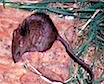
Everyone agrees that Easter Island was almost completely deforested by the time Europeans first visited in 1722. The key issue is causation. In the absence of evidence to refute the facts we lay out, Diamond chooses either to ignore or misrepresent what we do argue. We never argued that rats were the sole cause of deforestation. As the evidence shows and as we argued in our book, deforestation was a cumulative process that took centuries. It resulted from rat predation of seeds and from people using fire to clear vegetation for agriculture.
To defend his position that rats played no significant role in deforestation, Diamond cites a study by Mieth and Bork. Setting aside the fact that even if only a fraction of palm nuts were destroyed by rats, the cumulative effect would have been significant, let’s examine this study on its merits.
We were well aware of the work of Mieth and Bork as we did our work. But we were also aware of the fact (which Diamond fails to point out) that Mieth and Bork based their claim on nut fragments, not whole nuts. Before we rejected this study, we took the time to experiment ourselves with 25 modern rat-gnawed palm nuts from mainland Chile that we broke into fragments of the sizes resembling those reported by Mieth and Bork. This sample of 100% whole rat-gnawed nuts--when broken and then counted by their fragments--became a much, much smaller percentage. This shows the problem using Mieth and Bork whose estimate of 10% rat gnawed fragments implies that most nuts (if they were counted whole) were actually gnawed by rats.
Indeed, there is an extensive scientific literature on the impact of rats in island ecosystems that Diamond is either unaware of or simply doesn’t want readers to know about, such as one example from Lord Howe Island, where ecologists point out that without massive programs of rat eradication, the native palms on the island will go extinct. And rats have been on Lord Howe only since 1918, when a steamship ran aground! Diamond himself, in his own writing, has referred to rats as “agents of extermination” (Diamond 1985).
Bottom line: Diamond needs to explain how, in the absence of predators and with an almost unlimited supply of food, the rat population would have remained small and had no impact on native plants and animals.
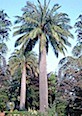
Next, Diamond makes the argument that even if rats could do this type of damage, the particular type of trees on Easter Island was not vulnerable to rats. The facts are as follows: Of the 17 major woody species identified from charcoal found in ancient cooking fires, 14 are documented to have seen major rat impacts elsewhere, or to be edible and highly vulnerable. Furthermore, because the Jubaea palms were slow growing and did not fruit until about 70 years of age, they were particularly vulnerable. Some fraction of new palms would grow, but not enough to replace an entire forest over time. Older trees would die, many were lost to fire, and in the end it was a losing battle; not enough young seedlings made it to reproductive age.
As for Diamond’s notion that palms were not diminished by rats, but taken down the islanders for rollers to move statues or to carve into canoes, enabling deep-sea fishing, anyone who has seen a palm tree cross-section with its thin, brittle bark and soft fibrous interior would quickly recognize these would not be suitable. Nor frankly would they have been capable of supporting the weight of multi-ton statues as rollers.
As for his allegation that palms were an important part of the islanders’ subsistence, there is overwhelming evidence that the islanders didn’t think so. As we document in The Statues That Walked on research conducted by Joan Wozniak (2003), Chris Stevenson (Stevenson et al 2002, 2006; Ladefoged et al. 2005, 2010) and Hans-Rudolf Bork (Bork et al. 2004) lithic mulch gardens, along with stone-walled gardens known locally as manavai, provided the basis for the islander’s subsistence soon after the island was settled. Palms provided no direct, long-term benefit so their loss had few if any consequences.
Chronology—When exactly was the island colonized?
One of our most important findings resulted from excavation and radiocarbon dating to establish the date of settlement as 300-800 years later than Diamond’s thesis requires. Diamond insists on missing evidence to argue for a longer chronology. His argument asks us to accept on faith the notion that “the evidence must be there, we just can’t find it.” That wouldn’t stand up in court, and it certainly doesn’t stand up in science. Until such time as serious scientists prove otherwise, there are no reliable radiocarbon dates that support settlement of Easter Island before 1200 A.D. (Hunt and Lipo 2006). To argue otherwise ignores more than 2,000 radiocarbon dates from multiple archipelagos that provide overwhelming evidence that all of the eastern Pacific Islands were settled only over the past thousand years (Rieth et al 2011;Wilmshurst et al 2011), with Easter settled around 1200 A.D. Even the most skeptical archaeologists working in the Pacific are now quibbling about chronological differences of only 50 to 100 years, not several centuries as Diamond imagines.
Statue Transport---Did the states move horizontally or vertically?
Diamond’s thesis hangs on the need for logs to “roll” the statues from the quarries to their final destinations. In support of his thesis, he asks the reader to “imagine it yourself.” Surely, he implies, it would be crazy to move a multi-ton statue in a standing position. And if all you are solely relying upon is your own imagination, it may sound like a scary proposition. But that’s not reason enough to declare some past event as impossible.
But readers need to keep in mind that Diamond’s collapse thesis relies heavily on how the statues were moved. To sustain his thesis regarding the eventual “collapse” of the ancient society, he needs statue movement to be the “engine” that caused the loss of trees. Decouple the loss of trees from moving statues and the “collapse” story looses steam. Thus, we are not surprised that Diamond holds so tenaciously to old beliefs and discredited claims.
But one has to wonder if Diamond has read The Statues that Walked. In the book we discuss how fallen statue positions, kinds of breakage, statue shapes with a forward center of mass, as well as statue modifications made between quarry and placement on platforms can only be explained by vertical movement. As archaeologist and colleague on the island Sergio Rapu (who has studied statues his whole life and has a M.A. degree in archaeology) taught us, the statues were “engineered to move.” Oral traditions have long insisted that they “walked.” And while some have shown that it is possible to move a statue horizontally on a contraption of logs, (as Diamond posits they were moved) such a method completely ignores the direct and unambiguous evidence provided by the statues themselves.
But there is much better news awaiting readers who might want “to imagine it” themselves. In recent experiments funded by National Geographic and fully filmed, we “walked” a multi-ton replica of an actual statue (one found along an ancient transport road). Moving a statue in a standing position is not only possible; it’s relatively easy and can be done with a small group of people using only ropes. Our experiment will be highlighted in a forthcoming NOVA-National Geographic television special to be broadcast on PBS in the spring of 2012. Then the rest of the world will see what we have seen—the statues of Easter Island walking upright! Stay tuned!
Collapse only after European Contact
Again Diamond makes an appeal to authority in lieu of reference to evidence. He mistakenly says we relied on only one source (Peiser, who does not even appear in our book’s bibliography—again, did he read our book?) who, he points out, has not done any work on the island. Let us also note once again that Diamond has not conducted any field work on the island. Nor to our knowledge has one of Diamond’s proclaimed “leading experts,” Paul Bahn, done any field studies on the island.
As we show in The Statues that Walked, rather than repeat assumptions and claims made in the past, we sought direct evidence with no preconceived ideas we needed to defend. In that frame of mind, what the evidence kept pointing to is that many of the “facts” offered up by so-called “experts” were simply claims repeated over and over and nothing more. The island was certainly transformed over the course of human history (including the dramatic impact of more than 100 years of sheep ranching once the Chileans took control of the island.). But what is Diamond’s evidence that prehistoric loss of the forest led to cultural and demographic collapse? There is none other than the assumption that losing trees is bad for people living on this island. Is there evidence of soil erosion? Yes, but it shows re-deposited soils were successfully cultivated. In addition, radiocarbon dating and modern observations show that the most dramatic soil erosion occurred in post-contact and modern times (i.e., largely the results of sheep ranching). Would the loss of trees have resulted in a critical shortfall of food and/or necessary materials? The answer is a resounding “no.” Could the palm tree have provided a vital food source for people in the form of nuts? Yes, however, the introduction of tree-dwelling rats meant that these pests would have consumed most of the nuts first.
Diamond repeats a number of traditional notions about the island’s history. In particular, he cites “evidence of widespread warfare” based on “oral accounts and preserved weapons and skeletal injuries.” Let’s examine this so-called evidence. First, oral traditions were collected in the 20th century, almost 200 years after European contact. Alfred Metraux, an anthropologist who studied the islanders’ oral traditions, concluded that they were most likely of very recent origin (Metraux 1940). Katherine Routledge, who worked on the island in the early 20th century, also describes how unreliable and contradictory she found the oral traditions. Our work does not draw upon oral traditions, given their uneven and unknown reliability. Some traditions may well be consistent with what actually happened in the past. In other cases they may not. It is impossible to evaluate them on their own merits and independent lines of evidence are necessary (e.g., statues “walking” had to be evaluated in terms of evidence beyond just oral traditions).
Diamond’s “preserved weapons,” the mata’a, are agricultural tools that he has chosen to describe as “weapons.” Their design alone, a rounded to irregular shape, should have been enough to make him question their purpose. But if he had read the microscopic studies reporting edge damage on thousands of these artifacts, he would have seen that the damage they show is consistent with their role in cutting and scrapping plant material (e.g., Church and Ellis 1994). Indeed, our field studies show that they are found in the greatest concentrations in the lithic mulch gardening areas, right where one would expect to find them. And the island has no fortifications, such as those we see on other Polynesian islands where warfare was frequent.
Diamond points to evidence of violence in human skeletal remains. However, the published data reveal there are only two cases in which violence appears to have resulted in death, and one of these was an individual who suffered a bullet wound to the head. The skeletal evidence shows injuries and as we explain in The Statues that Walked, the ancient islanders engaged in some conflicts with one another. But as we outline in our book, statues were a focus of competitive signaling that staved off lethal violence.
Finally, Diamond ignores field research reporting dated domestic habitation sites (see Hunt and Lipo 2009 for discussion). When the habitations are plotted in fifty-year intervals, the number of those occupied clearly shows that the first and only sustained decline, as a relative measure of the population, began only in the first interval following European contact. Before contact the data show a population that is growing and stabilizing, as reflected in their habitations across the landscape. There is no evidence of population decline, let alone “collapse” until after European contact. Indeed, there is direct, abundant evidence that population numbers grew, stabilized, and then fell only after European contact beginning in 1722.
The Lesson of Easter Island
Rather than address the evidence, Diamond attempts to deride our work by claiming that the people on the dust jacket are not experts in the field. Diamond is certainly no expert in the field of Easter Island archaeology, regardless of his popularity. The individuals who commented on our book are experts in the areas of human and environmental change, including extensive research in the Pacific Islands. These well-qualified, highly respected individuals know how science works and are directly engaged in research on ecology, evolution, and environmental change. Lacking quotes by “experts” who we have necessarily challenged in our research (perhaps such as Diamond?) is certainly no reason for suspicion. The truth of the matter rests in the hands of the reader and the factual evidence outlined in The Statues that Walked.
There are those such as popular writer Paul Bahn and and palynologist John Flenley who continue to push the old doomsday, “ecocide” scenario. But recent work has shown the central significance of lithic mulch (e.g., Bork et al. 2004; Stevenson et al. 2005; Ladefoged et al. 2010; Wozniak 1999, 2003), the lack of evidence for a 1680 AD “Collapse” event (e.g., Mulrooney et al. 2009, Lipo and Hunt 2009), that mata’a are not developed weapons (Church and Rigney 1994; Church and Ellis 1995), the lack of structural integrity of palms to serve as rollers or use as canoes (e.g., Bork and Meith 2003), the lack of evidence for cannibalism (e.g., McLaughlin 2005), the shorter chronology for colonization not just for Easter, but for the entire eastern Pacific (e.g., Kennett et al. 2006; Reith et al. 2011; Wilmshurst et al. 2008, 2011), the devastating effects that rats have on island environments (e.g., Athens 2009), details about the impact that Europeans had on historic populations (e.g., Fischer 2005), direct evidence about statue transport based on analysis of moai roads (e.g., Lipo and Hunt 2005; Love 2001), the inherently nutrient poor state of soil on Rapa Nui (e.g., Ladefoged 2005) and more. These findings point to the growing body of evidence that falsifies the basic claims made in favor of “ecocide.” And based on this evidence, the majority of archaeologists working on Easter and elsewhere in Polynesia now reject the notion that the island suffered a pre-European collapse.
Our work in The Statues that Walked brings a wide range of current research into focus and combines more than a decade of our own field and related Easter Island research to form a coherent picture that is the basis of a new scientific consensus. Easter Island was a story of remarkable success. And as young Native Islanders have told us, knowledge of their ancestors’ success, not failure, matters greatly to them. The “collapse” story for Easter Island is a convenient and popular parable used for shocking the public about the dangers of over-exuberance and environmental disregard. However, as we describe in our book, the island’s collapse came only with the germs, guns, and enslavement brought by the outside world. Given what is at stake in terms of lessons to be learned about long-term survival on an isolated and resource poor location, the truth matters. Indeed, we have much to learn from Easter Island.
References
Athens, Stephen
2009 Rattus exulans and the catastrophic disappearance of Hawai'i's native lowland forest. Biological Invasions 11: 1489-1501.
Auld T.D., Hutton I., Ooi M.K.J., Denham A.J.
2010 Disruption of recruitment in two endemic palms on Lord Howe Island by invasive rats. Biological Invasions 12: 3351-3361
Bork, Hans-Rudolf, Andreas Mieth, and Bernd Tschochner
2004 Nothing but stones? A review of the extent and technical efforts of prehistoric stone mulching on Rapa Nui. Rapa Nui Journal 18(1): 10-14.
Butler, K. R., C. R. Prior, and J. R. Flenley
2004 Anomalous radiocarbon dates from Easter Island. Radiocarbon 46(1): 395-405.
Campbell, D. J., Atkinson, I. A. E.
2002 Depression of tree recruitment by the Pacific rat (Rattus exulans Peale) on New Zealand’s northern offshore islands. Biological Conservation 107:19-35.
Church, Flora, and Grace Ellis
1996 A use-wear analysis of obsidian tools from an Ana Kionga. Rapa Nui Journal 10(4): 81-88.
Church, F., and J. Rigney
1994 A microwear analysis of tools from site 10-241, Easter Island--An inland processing site. Rapa Nui Journal 8(4): 101-105.
Diamond, J.
1985 Rats as agents of extermination. Nature 318: 602-603.
Drake, D.R. and T. L. Hunt
2009 Invasive rodents on islands: integrating historical and contemporary ecology. Biological Invasions 11: 1483-1487.
Fischer, Steven R.
2005 Island at the End of the World: The turbulent history of Easter Island. London: Reaktion Books.
Hunt, T. L., and C. P. Lipo
2006 Late colonization of Easter Island. Science 311(5767): 1603-1606.
Hunt, T.L. and C.P. Lipo
2009 Revisiting Rapa Nui (Easter Island) “Ecocide.” Pacific Science 63: 601-616.
Kennett, Douglas, et al.
2006 Prehistoric human impacts on Rapa, French Polynesia. Natural History 80 (October 2004): 340-354.
Ladefoged, T. N., C. M. Stevenson, S. Haoa, M. Mulrooney, C. Puleston, P. M. Vitousek and O.A. Chadwick
2010 Soil nutrient analysis and Rapa Nui gardening. Archaeology in Oceania 45:80-85.
Lipo, Carl. P., and Terry L. Hunt
2005 Mapping prehistoric statue roads on Easter Island. Antiquity 79:158-168.
Lipo, C. P. and T. L. Hunt
2009 AD 1680 and Easter Island Prehistory. Asian Perspectives. 48(2): 309-317.
McLaughlin, S.
2005 Cannibalism and Easter Island: Evaluation, Discussion of Probabilities, and Survey of the Literature on the Subject. Rapa Nui Journal 19(1): 30-50.
Métraux, Alfred
1940 Ethnology of Easter Island. Honolulu: Bulletin, 160, Bernice P. Bishop Museum.
Mulrooney, M. A., T. N. Ladefoged, C. M. Stevenson, and S. Haoa,
2009 The Myth of AD 1680: New Evidence from Hanga Ho‘onu, Rapa Nui (Easter Island). Rapa Nui Journal 23(2): 94-105
Owsley, Douglas W., George W. Gill, and Stephen D. Ousley
1994 Biological effects of European contact on Easter Island. In In the Wake of Contact: Biological Responses to Conquest. C.S. Larsen and G.R. Milner, eds., pp. 161-177. New York: Wiley-Liss.
Reith, Timothy M., Terry L. Hunt, Carl P. Lipo, Janet M. Wilmshurst
2011 The Thirteenth Century Polynesian Colonization of Hawai‘i Island Journal of Archaeological Science 38(10): 2740-2749
Steadman, David W., Patricia Vargas Casanova, and Claudio Cristino Ferrando
1994 Stratigraphy, Chronology, and Cultural Context of an Early Faunal Assemblage from Easter Island. Asian Perspectives 33(1): 79-96.
Stevenson, Christopher M., Thegn Ladefoged, and Sonia Haoa
2002 Productive Strategies in an Uncertain Environment: Prehistoric Agriculture on Easter Island. Rapa Nui Journal 16(1): 17-22.
Stevenson, C. M., S. Haoa, T. N. Ladefoged, M. A. Mulrooney, P. M. Vitousek, O. A. Chadwick, and C. Puleston
2010 Evaluating Rapa Nui Prehistoric Terrestrial Resource Degradation. Rapa Nui Journal 24(2): 15-16.
Wilmshurst, J.M., T.L. Hunt, C.P. Lipo, and A. Anderson
2011 High precision radiocarbon dating shows recent and rapid initial human colonization of East Polynesia. Proceedings of the National Academy of Sciences USA 108 (5):1815-1820. http://www.pnas.org/cgi/doi/10.1073/pnas.1015876108
Wilmshurst, J.M., A.J. Anderson, T.F.G. Higham, and TH Worthy.
2008 Dating the late prehistoric dispersal of Polynesians to New Zealand using the commensal Pacific rat. Proceedings of the National Academy of Sciences USA 105 (22) 7676–7680. www.pnas.org/cgi/doi/10.1073/pnas.0801507105
Wozniak, Joan A.
1999 Prehistoric horticultural practices on Easter Island: lithic mulched gardens and field systems. Rapa Nui Journal 13(3): 95-99.
Wozniak, Joan A.
2003 Exploring Landscapes on Easter Island (Rapa Nui) with Geoarchaeological Studies: Settlement, Subsistence, and environmental changes. Ph.D. Dissertation. University of Oregon, Eugene.
Jared Diamond attempts to defend the myths of Easter Island—
Carl Lipo and Terry Hunt Respond
We are hardly surprised that Jared Diamond would write that we are “transparently wrong” about Easter Island. He has a vested interest in defending his “ecocide” storyline published back in 1995 in Discover Magazine and again in his bestselling book Collapse. We acknowledge that Diamond has much at stake here. But so do the Easter Islanders. So too does the field of archeology. And so too does the truth.
Diamond’s thesis about what happened on Easter Island is not new, building as it did on presumptions originally offered by the first Europeans to set foot on the island in the early 18th century. Sadly, this thesis was not challenged because it so conveniently confirmed 18th century prejudice about superior (European) and inferior (everyone not European) societies. Thor Heyerdahl expanded the story and added a further racist twist about lighter-skinned people who accomplished much, and darker-skinned people who incited rebellion, warfare, and ruin. Diamond simply continues the tradition by reworking the tale to remove the racist elements, relying instead upon an environmental twist put forth by popular writer Bahn and palynologist Flenley.
An important role of scholarship is to examine long-held myths and see if they hold up under modern scientific tests. The original Easter Island thesis, in any of its iterations, including Diamond’s, does not. Let us point out that we didn’t go to Easter Island to tear down Diamond’s thesis. We went there to support it by filling in the missing archeological data. It was only when we convinced ourselves that any iteration of that original story, including Diamond’s, had no archeological evidence to support it and much to contract it that we began to see where the research was leading us.
It is also important to note that Diamond is not an archaeologist and has not done archaeological or palaeoecological research in Polynesia. We have been doing research and primary archaeological field work on Easter since 2000. One of us (TH) has worked in Pacific Island archaeology for nearly 40 years and taught at University of Hawaii for 23 years. On Easter Island we have done more field work and covered a greater breadth of archaeology than anyone else in the past two decades. Our work has been peer-reviewed and published in science’s most selective and prestigious journals. We outline in detail the evidence from our work and that of scores of colleagues working on the island in our book The Statues that Walked. Diamond would have readers believe that the majority of archeologists who have studied Easter Island support his thesis. It is simply not true. The new evidence that we and other serious scholars have provided over the past decade not only contradicts the old story that Diamond has so heavily invested in, but has led to a new consensus among the majority of scholars around our work.
Now, let us deal with the four or five major points of contention.
Deforestation
Everyone agrees that Easter Island was almost completely deforested by the time Europeans first visited in 1722. The key issue is causation. In the absence of evidence to refute the facts we lay out, Diamond chooses either to ignore or misrepresent what we do argue. We never argued that rats were the sole cause of deforestation. As the evidence shows and as we argued in our book, deforestation was a cumulative process that took centuries. It resulted from rat predation of seeds and from people using fire to clear vegetation for agriculture.
To defend his position that rats played no significant role in deforestation, Diamond cites a study by Mieth and Bork. Setting aside the fact that even if only a fraction of palm nuts were destroyed by rats, the cumulative effect would have been significant, let’s examine this study on its merits.
We were well aware of the work of Mieth and Bork as we did our work. But we were also aware of the fact (which Diamond fails to point out) that Mieth and Bork based their claim on nut fragments, not whole nuts. Before we rejected this study, we took the time to experiment ourselves with 25 modern rat-gnawed palm nuts from mainland Chile that we broke into fragments of the sizes resembling those reported by Mieth and Bork. This sample of 100% whole rat-gnawed nuts--when broken and then counted by their fragments--became a much, much smaller percentage. This shows the problem using Mieth and Bork whose estimate of 10% rat gnawed fragments implies that most nuts (if they were counted whole) were actually gnawed by rats.
Indeed, there is an extensive scientific literature on the impact of rats in island ecosystems that Diamond is either unaware of or simply doesn’t want readers to know about, such as those from Lord Howe Island, where ecologists point out that without massive programs of rat eradication, the native palms on the island will go extinct. And rats have been on Lord Howe only since 1918, when a steamship ran aground! Diamond himself, in his own writing, has referred to rats as “agents of extermination” (Diamond 1985).
Bottom line: Diamond needs to explain how, in the absence of predators and with an almost unlimited supply of food, the rat population would have remained small and had no impact on native plants and animals.
Next, Diamond makes the argument that even if rats could do this type of damage, the particular type of trees on Easter Island were not vulnerable to rats. The facts are as follows: Of the 17 major woody species identified from charcoal found in ancient cooking fires, 14 are documented to have seen major rat impacts elsewhere, or to be edible and highly vulnerable. Furthermore, because the Jubaea palms were slow growing and did not fruit until about 70 years of age, they were particularly vulnerable. Some fraction of new palms would grow, but not enough to replace an entire forest over time. Older trees would die, many were lost to fire, and in the end it was a losing battle; not enough young seedlings made it to reproductive age.
As for Diamond’s notion that palms were not diminished by rats, but taken down the islanders for rollers to move statues or to carve into canoes, enabling deep-sea fishing, anyone who has seen a palm tree cross-section with its thin, brittle bark and soft fibrous interior would quickly recognize these would not be suitable. Nor frankly would they have been capable of supporting the weight of multi-ton statues as rollers.
As for his allegation that palms were an important part of the islanders’ subsistence, there is overwhelming evidence that the islanders didn’t think so. As we document in The Statues That Walked on research conducted by Joan Wozniak (2003), Chris Stevenson (Stevenson et al 2002, 2006; Ladefoged et al. 2005, 2010) and Hans-Rudolf (Bork et al. 2004) lithic mulch gardens, along with stone-walled gardens known locally as manavai, provided the basis for the islander’s subsistence soon after the island was settled. Palms provided no direct, long-term benefit so their loss had few if any consequences.
Chronology—When exactly was the island colonized?
One of our most important findings was excavation and radiocarbon dating to establish the date of settlement as 300-800 years later than Diamond’s thesis requires. Diamond insists on missing evidence to argue for a longer chronology. His argument asks us to accept on faith the notion that “the evidence must be there, we just can’t find it.” That wouldn’t stand up in court, and it certainly doesn’t stand up in science. Until such time as serious scientists prove otherwise, there are no reliable radiocarbon dates that support settlement of Easter Island before 1200 A.D. (Hunt and Lipo 2006). To argue otherwise ignores more than 2,000 radiocarbon dates from multiple archipelagos that provide overwhelming evidence that all of the eastern Pacific Islands were settled only over the past thousand years (Rieth et al 2011;Wilmshurst et al 2011), with Easter settled around 1200 A.D. Even the most skeptical archaeologists working in the Pacific are now quibbling about chronological differences of only 50 to 100 years, not several centuries as Diamond imagines.
Statue Transport---Did the states move horizontally or vertically?
Diamond’s thesis hangs on the need for logs to “roll” the statues from the quarries to their final destinations. In support of his thesis, he asks the reader to “imagine it yourself.” Surely, he implies, it would be crazy to move a multi-ton statue in a standing position. And if all you are solely relying upon is your own imagination, it may sound like a scary proposition. But that’s not reason enough to declare some past event as impossible.
But readers need to keep in mind that Diamond’s collapse thesis relies heavily on how the statues were moved. To sustain his thesis regarding the eventual “collapse” of the ancient society, he needs statue movement to be the “engine” that caused the loss of trees. Decouple the loss of trees from moving statues and the “collapse” story looses steam. Thus, we are not surprised that Diamond holds so tenaciously to old beliefs and discredited claims.
But one has to wonder if Diamond has read The Statues that Walked. In the book we discuss how fallen statue positions, kinds of breakage, statue shapes with a forward center of mass, as well as statue modifications made between quarry and placement on platforms can only be explained by vertical movement. As archaeologist and colleague on the island Sergio Rapu (who has studied statues his whole life and has a M.A. degree in archaeology) taught us, the statues were “engineered to move.” Oral traditions have long insisted that they “walked.” And while some have shown that it is possible to move a statue horizontally on a contraption of logs, (as Diamond posits they were moved) such a method completely ignores the direct and unambiguous evidence provided by the statues themselves.
But there is much better news awaiting readers who might want “to imagine it” themselves. In recent experiments funded by National Geographic and fully filmed, we “walked” a multi-ton replica of an actual statue (one found along an ancient transport road). Moving a statue in a standing position is not only possible; it’s relatively easy and can be done with a small group of people using only ropes. Our experiment will be highlighted in a forthcoming NOVA-National Geographic television special to be broadcast on PBS in the spring of 2012. Then the rest of the world will see what we have seen—the statues of Easter Island walking upright! Stay tuned!
Collapse only after European Contact
Again Diamond makes an appeal to authority in lieu of reference to evidence. He mistakenly says we relied on only one source (Peiser, who does not even appear in our book’s bibliography—again, did he read our book?) who, he points out, has not done any work on the island. Let us also note once again that Diamond has not conducted any field work on the island. Nor to our knowledge has one of Diamond’s proclaimed “leading experts,” Paul Bahn, done any field studies on the island.
As we show in The Statues that Walked, rather than repeat assumptions and claims made in the past, we sought direct evidence with no preconceived ideas we needed to defend. In that frame of mine, what the evidence kept pointing to is that many of the “facts” offered up by so-called “experts” were simply claims repeated over and over and nothing more. The island was certainly transformed over the course of human history (including the dramatic impact of more than 100 years of sheep ranching once the Chileans took control of the island.). But what is Diamond’s evidence that prehistoric loss of the forest led to cultural and demographic collapse? There is none other than the assumption that losing trees is bad for people living on this island. Is there evidence of soil erosion? Yes, but it shows re-deposited soils were successfully cultivated. In addition, radiocarbon dating and modern observations show that the most dramatic soil erosion occurred in post-contact and modern times (i.e., largely the results of sheep ranching). Would the loss of trees have resulted in a critical shortfall of food and/or necessary materials? The answer is a resounding “no.” Could the palm tree have provided a vital food source for people in the form of nuts? Yes, however, the introduction of tree-dwelling rats meant that these pests would have consumed most of the nuts first.
Diamond repeats a number of traditional notions about the island’s history. In particular, he cites “evidence of widespread warfare” based on “oral accounts and preserved weapons and skeletal injuries.” Let’s examine this so-called evidence. First, oral traditions were collected in the 20th century, almost 200 years after European contact. Alfred Metraux, an anthropologist who studied the islanders’ oral traditions, concluded that they were most likely of very recent origin (Metraux 1940). Katherine Routledge, who worked on the island in the early 20th century, also describes how unreliable and contradictory she found the oral traditions. Our work does not draw upon oral traditions, given their uneven and unknown reliability. Some traditions may well be consistent with what actually happened in the past. In other cases they may not. It is impossible to evaluate them on their own merits and independent lines of evidence are necessary (e.g., statues “walking” had to be evaluated in terms of evidence beyond just oral traditions).
Diamond’s “preserved weapons,” the mata’a, are agricultural tools that he has chosen to describe as “weapons.” Their design alone, a rounded to irregular shape, should have been enough to make him question their purpose. But if he had read the microscopic studies reporting edge damage on thousands of these artifacts, he would have seen that the damage they show is consistent with their role in cutting and scrapping plant material (e.g., Church and Ellis 1994). Indeed, our field studies show that they are found in the greatest concentrations in the lithic mulch gardening areas, right where one would expect to find them. And the island has no fortifications, such as those we see on other Polynesian islands where warfare was frequent.
Diamond points to evidence of violence in human skeletal remains. However, the published data reveal there are only two cases in which violence appears to have resulted in death, and one of these was an individual who suffered a bullet wound to the head. The skeletal evidence shows injuries and as we explain in The Statues that Walked, the ancient islanders engaged in some conflicts with one another. But as we outline in our book, statues were a focus of competitive signaling that staved off lethal violence.
Finally, Diamond ignores field research reporting dated domestic habitation sites (see Hunt and Lipo 2009 for discussion). When the habitations are plotted in fifty-year intervals, the number of those occupied clearly shows that the first and only sustained decline, as a relative measure of the population, began only in the first interval following European contact. Before contact the data show a population that is growing and stabilizing, as reflected in their habitations across the landscape. There is no evidence of population decline, let alone “collapse” until after European contact. Indeed, there is direct, abundant evidence that population numbers grew, stabilized, and then fell only after 1722.
The Lesson of Easter Island
Rather than address the evidence, Diamond attempts to deride our work by claiming that the people on the dust jacket are not experts in the field. Diamond is certainly no expert in the field of Easter Island archaeology, regardless of his popularity. The individuals who commented on our book are experts in the areas of human and environmental change, including extensive research in the Pacific Islands. These well-qualified, highly respected individuals know how science works and are directly engaged in research on ecology, evolution, and environmental change. Lacking quotes by “experts” who we have necessarily challenged in our research (perhaps such as Diamond?) is certainly no reason for suspicion. The truth of the matter rests in the hands of the reader and the factual evidence outlined in The Statues that Walked.
There are those such as popular writer Paul Bahn and and palynologist John Flenley who continue to push the old doomsday, “ecocide” scenario. But recent work has shown the central significance of lithic mulch (e.g., Bork et al. 2004; Stevenson et al. 2005; Ladefoged et al. 2010; Wozniak 1999, 2003), the lack of evidence for an 1680 AD “Collapse” event (e.g., Mulrooney et al. 2009, Lipo and Hunt 2009), that mata’a are not developed weapons (Church and Rigney 1994; Church and Ellis 1995), the lack of structural integrity of palms to serve as rollers or use as canoes (e.g., Bork and Meith 2003), the lack of evidence for cannibalism (e.g., McLaughlin 2005), the shorter chronology for colonization not just for Easter, but for the entire eastern Pacific (e.g., Kennett et al. 2006; Reith et al. 2011; Wilmshurst et al. 2008, 2011), the devastating effects that rats have on island environments (e.g., Athens 2009), details about the impact that Europeans had on historic populations (e.g., Fischer 2005), direct evidence about statue transport based on analysis of moai roads (e.g., Lipo and Hunt 2005; Love 2001), the inherently nutrient poor state of soil on Rapa Nui (e.g., Ladefoged 2005) and more. These new findings point to the growing body of evidence that falsifies the basic claims made in favor of “ecocide.” And based on this evidence, the majority of archaeologists working on Easter and elsewhere in Polynesia now reject the notion that the island suffered a pre-European collapse.
Our work in The Statues that Walked brings a wide range of current research into focus and combines more than a decade of our own field and related Easter Island research to form a coherent picture that is the basis of a new scientific consensus. Easter Island was a story of remarkable success. And as young Native Islanders have told us, knowledge of their ancestors’ success, not failure, matters greatly to them. The “collapse” story for Easter Island is a convenient and popular parable used for shocking the public about the dangers of over-exuberance and environmental disregard. However, as we describe in our book, the island’s collapse came only with the germs, guns, and enslavement brought by the outside world. Given what is at stake in terms of lessons to be learned about long-term survival on an isolated and resource poor location, the truth matters. Indeed, we have much to learn from Easter Island.
References
Athens, Stephen
2009 Rattus exulans and the catastrophic disappearance of Hawai'i's native lowland forest. Biological Invasions 11: 1489-1501.
Auld T.D., Hutton I., Ooi M.K.J., Denham A.J.
2010 Disruption of recruitment in two endemic palms on Lord Howe Island by invasive rats. Biological Invasions 12: 3351-3361
Bork, Hans-Rudolf, Andreas Mieth, and Bernd Tschochner
2004 Nothing but stones? A review of the extent and technical efforts of prehistoric stone mulching on Rapa Nui. Rapa Nui Journal 18(1): 10-14.
Butler, K. R., C. R. Prior, and J. R. Flenley
2004 Anomalous radiocarbon dates from Easter Island. Radiocarbon 46(1): 395-405.
Campbell, D. J., Atkinson, I. A. E.
2002 Depression of tree recruitment by the Pacific rat (Rattus exulans Peale) on New Zealand’s northern offshore islands. Biological Conservation 107:19-35.
Church, Flora, and Grace Ellis
1996 A use-wear analysis of obsidian tools from an Ana Kionga. Rapa Nui Journal 10(4): 81-88.
Church, F., and J. Rigney
1994 A microwear analysis of tools from site 10-241, Easter Island--An inland processing site. Rapa Nui Journal 8(4): 101-105.
Diamond, J.
1985 Rats as agents of extermination. Nature 318: 602-603.
Drake, D.R. and T. L. Hunt
2009 Invasive rodents on islands: integrating historical and contemporary ecology. Biological Invasions 11: 1483-1487.
Fischer, Steven R.
2005 Island at the End of the World: The turbulent history of Easter Island. London: Reaktion Books.
Hunt, T. L., and C. P. Lipo
2006 Late colonization of Easter Island. Science 311(5767): 1603-1606.
Hunt, T.L. and C.P. Lipo
2009 Revisiting Rapa Nui (Easter Island) “Ecocide.” Pacific Science 63: 601-616.
Kennett, Douglas, et al.
2006 Prehistoric human impacts on Rapa, French Polynesia. Natural History 80 (October 2004): 340-354.
Ladefoged, T. N., C. M. Stevenson, S. Haoa, M. Mulrooney, C. Puleston, P. M. Vitousek and O.A. Chadwick
2010 Soil nutrient analysis and Rapa Nui gardening. Archaeology in Oceania 45:80-85.
Lipo, Carl. P., and Terry L. Hunt
2005 Mapping prehistoric statue roads on Easter Island. Antiquity 79:158-168.
Lipo, C. P. and T. L. Hunt
2009 AD 1680 and Easter Island Prehistory. Asian Perspectives. 48(2): 309-317.
McLaughlin, S.
2005 Cannibalism and Easter Island: Evaluation, Discussion of Probabilities, and Survey of the Literature on the Subject. Rapa Nui Journal 19(1): 30-50.
Métraux, Alfred
1940 Ethnology of Easter Island. Honolulu: Bulletin, 160, Bernice P. Bishop Museum.
Mulrooney, M. A., T. N. Ladefoged, C. M. Stevenson, and S. Haoa,
2009 The Myth of AD 1680: New Evidence from Hanga Ho‘onu, Rapa Nui (Easter Island). Rapa Nui Journal 23(2): 94-105
Owsley, Douglas W., George W. Gill, and Stephen D. Ousley
1994 Biological effects of European contact on Easter Island. In In the Wake of Contact: Biological Responses to Conquest. C.S. Larsen and G.R. Milner, eds., pp. 161-177. New York: Wiley-Liss.
Reith, Timothy M., Terry L. Hunt, Carl P. Lipo, Janet M. Wilmshurst
2011 The Thirteenth Century Polynesian Colonization of Hawai‘i Island Journal of Archaeological Science 38(10): 2740-2749
Steadman, David W., Patricia Vargas Casanova, and Claudio Cristino Ferrando
1994 Stratigraphy, Chronology, and Cultural Context of an Early Faunal Assemblage from Easter Island. Asian Perspectives 33(1): 79-96.
Stevenson, Christopher M., Thegn Ladefoged, and Sonia Haoa
2002 Productive Strategies in an Uncertain Environment: Prehistoric Agriculture on Easter Island. Rapa Nui Journal 16(1): 17-22.
Stevenson, C. M., S. Haoa, T. N. Ladefoged, M. A. Mulrooney, P. M. Vitousek, O. A. Chadwick, and C. Puleston
2010 Evaluating Rapa Nui Prehistoric Terrestrial Resource Degradation. Rapa Nui Journal 24(2): 15-16.
Wilmshurst, J.M., T.L. Hunt, C.P. Lipo, and A. Anderson
2011 High precision radiocarbon dating shows recent and rapid initial human colonization of East Polynesia. Proceedings of the National Academy of Sciences USA 108 (5):1815-1820.
www.pnas.org/cgi/doi/10.1073/pnas.1015876108
Wilmshurst, J.M., A.J. Anderson, T.F.G. Higham, and TH Worthy.
2008 Dating the late prehistoric dispersal of Polynesians to New Zealand using the commensal Pacific rat. Proceedings of the National Academy of Sciences USA 105 (22) 7676–7680. www.pnas.org/cgi/doi/10.1073/pnas.0801507105
Wozniak, Joan A.
1999 Prehistoric horticultural practices on Easter Island: lithic mulched gardens and field systems. Rapa Nui Journal 13(3): 95-99.
Wozniak, Joan A.
2003 Exploring Landscapes on Easter Island (Rapa Nui) with Geoarchaeological Studies: Settlement, Subsistence, and environmental changes. Ph.D. Dissertation. University of Oregon, Eugene.


 +
+ =
= ?
?