
Showing posts with label evolution. Show all posts
Showing posts with label evolution. Show all posts
Monday, October 26, 2015
Evolutionary Research and Graduate Programs at Binghamton University... Interested?
Now that I have landed at Binghamton University, I am looking forward to working with graduate students who are interested in pursuing a PhD in evolution-based research focusing on the archaeological record and/or historical and contemporary data. Ideal students would have an interest in quantitative methods, programming and other kinds of tools that enable evolutionary modeling (e.g., simulation). Some experience in archaeometry, artifact analysis, phylogenetic analyses, materials analyses, geochronology, GIS, remote sensing, paleoenvironmental analyses, spatial studies, statistics, etc. would be beneficial though training in these areas is certainly available at Binghamton. Fundamentally, I am looking for students who are passionate about science and share my passion for figuring out why the human past unfolded as it did.  Binghamton University offers a remarkable array of resources that can provided a background and training in evolutionary studies. Within the Anthropology Department, the PhD program is a general sort with the usual exposure to anthropological research. However, in my own courses I teach all my classes within a science- and evolutionary based framework. In addition to my own classes, opportunities exist within the department to gain training from other faculty. For example, Koji Lum runs the Laboratory of Evolutionary Anthropology and Health (LEAH) and does research that emphasizes the Pacific islands, a region of particular interest to me. David (Andy) Merriwether runs an ancient DNA laboratory and is doing amazing work studying past populations of camelids. The potential for collaborative work and cross-training in these laboratories is exceptional. In the area of paleoanthropology, Rolf Quam is studying human evolution and has been active at Atapuerca in northern Spain.
Outside the Department there is an even greater array of opportunities for training in evolution. First, we have EVoS, the Evolutionary Studies Program. EVoS is an interdisciplinary program that brings together faculty from across the University who are interested in evolutionary theory and evolutionary science. EVoS offers classes in evolutionary thinking and has a prominent lecture series that brings researchers from around the world to present on evolution-based research. The Director of EVoS is David Sloan Wilson, who is well-known for his evolutionary theory advocacy, research into the dynamics of group-level behavior and applications of evolutionary thinking to contemporary issues in communities. Wilson is a remarkable thinker who is fearless in his approach to using evolution in the study of human populations.
Second, Binghamton has the newly established Center for Collective Dynamics of Complex Systems, CoCo. CoCo is an interdisciplinary program that fosters collaborations among faculty who are interested in studying complexity. Many of the CoCo researchers make use of evolutionary dynamics as a means of studying change in populations and their foci complement that of EVoS quite nicely.
In terms of science-based analyses of the archaeological record and in addition to resources in Geological Sciences, Binghamton has the Advanced Diagnostics Laboratory (ADL). ADL is a centrally managed laboratory with a diverse array of instruments that are suitable for studying physical properties of material culture. These instruments will play an important role in generating data on variability in artifact performance as it varies over space and time.
In the realm of field research, we are currently putting into place a program in remote sensing and geospatial research through a collaboration with Geography, Geology, the MA program in Public Archaeology and Environmental Studies. This collaboration will bring together tools and instruments for mapping landscapes at the surface and subsurface. We are in the process of assembling a suite of fixed wing UAS, rotor UAS - with color, NIR and LiDAR sensors. We are also setting up a laboratory for object-based image analysis and are acquiring a suite of geophysical equipment: ground penetrating radar, seismic, resistivity and magnetometry/gradiometry. We should be well positioned to offer training in cutting edge field techniques in the next year.
Funding is available for graduate students within the Anthropology department. Applications should be submitted early to be considered for departmental funding. Additional sources of funding depend on research projects and funds that are always in the works.
Overall, I welcome students who wish do evolutionary research in any part of the prehistoric, historic and contemporary world. While my own work is in the Pacific and the Mississippi Valley, students need not focus in those areas. If any of this interests you, feel free to contact me. In addition, check out the Anthropology graduate program and application procedures. We'd be happy to give you the tour of the University if you care to visit the beautiful Northeast.


Wednesday, July 10, 2013
Friday, October 7, 2011
Diamond attempts to defend myths of Easter Island: Lipo and Hunt respond
Author Mark Lynas (The God Species: How the planet can survive the age of humans, Six Degrees, High Tide) recently posted a discussion of The Statues That Walked on his blog (www.marklynas.org) -- The myth of Easter Island’s ecocide. In his essay, Lynas agrees with the basis of our research and concludes:
Like all of us, modern Easter Islanders are inter-dependent with the rest of the world. Perhaps the more recent studies of their history will help challenge the Hobbesian and pessimistic view that human nature necessarily tends towards destruction and violence. Resilience and sustainability are just as likely outcomes, even over the longer term. This, I think, is the true lesson of Easter Island.
His essay states, as we do in TSTW, that ecocide - at least on Easter Island - is a myth and that the evidence contradicts claims made by Jared Diamond (and others). Interestingly, Jared Diamond (Collapse, Guns, Germs and Steel) chose this forum as a platform to argue against our research and conclusions. Diamond's letter to Mark's posting is posted in full here. Below is our response to Diamond's comments. We have cross posted this here and on Mark Lynas' blog. Enjoy!
-----------------------------------------------------------------------------------------------------------------------------------------------------------------
Diamond attempts to defend myths of Easter Island: Lipo and Hunt respond
We are hardly surprised that Jared Diamond would write that we are “transparently wrong” about Easter Island. He has a vested interest in defending his “ecocide” storyline published back in 1995 in Discover Magazine and again in his bestselling book Collapse. We acknowledge that Diamond has much at stake here. But so do the Easter Islanders. So too does the field of archeology. And so too does the truth.
Diamond’s thesis about what happened on Easter Island is not new, building as it did on presumptions originally offered by the first Europeans to set foot on the island in the early 18th century. Sadly, this thesis was not challenged because it so conveniently confirmed 18th century prejudice about superior (European) and inferior (everyone not European) societies. Thor Heyerdahl expanded the story and added a further racist twist about lighter-skinned people who accomplished much, and darker-skinned people who incited rebellion, warfare, and ruin. Diamond simply continues the tradition by reworking the tale to remove the racist elements, relying instead upon an environmental twist put forth by popular writer Paul Bahn and palynologist John Flenley.
An important role of scholarship is to examine long-held myths and see if they hold up under modern scientific tests. The original Easter Island thesis, in any of its iterations, including Diamond’s, does not. Let us point out that we didn’t go to Easter Island to tear down Diamond’s thesis. We went there to support it by filling in the missing archeological data. It was only when we convinced ourselves that any iteration of that original story, including Diamond’s, had no archeological evidence to support it and much to contradict it that we began to see where the research was leading us.
It is also important to note that Diamond is not an archaeologist and has not done archaeological or palaeoecological research in Polynesia. We have been doing research and primary archaeological field work on Easter since 2000. One of us (TH) has worked in Pacific Island archaeology for nearly 40 years and taught at University of Hawaii for 23 years. On Easter Island we have done more field work and covered a greater breadth of archaeology than anyone else in the past two decades. Our work has been peer-reviewed and published in science’s most selective and prestigious journals. We outline in detail the evidence from our work and that of scores of colleagues working on the island in our book The Statues that Walked. Diamond would have readers believe that the majority of archeologists who have studied Easter Island support his thesis. It is simply not true. The new evidence that we and other serious scholars have provided over the past decade not only contradicts the old story that Diamond has so heavily invested in, but has led to a new consensus among the majority of scholars around our work.
Now, let us deal with the four or five major points of contention.
Deforestation
Everyone agrees that Easter Island was almost completely deforested by the time Europeans first visited in 1722. The key issue is causation. In the absence of evidence to refute the facts we lay out, Diamond chooses either to ignore or misrepresent what we do argue. We never argued that rats were the sole cause of deforestation. As the evidence shows and as we argued in our book, deforestation was a cumulative process that took centuries. It resulted from rat predation of seeds and from people using fire to clear vegetation for agriculture.
To defend his position that rats played no significant role in deforestation, Diamond cites a study by Mieth and Bork. Setting aside the fact that even if only a fraction of palm nuts were destroyed by rats, the cumulative effect would have been significant, let’s examine this study on its merits.
We were well aware of the work of Mieth and Bork as we did our work. But we were also aware of the fact (which Diamond fails to point out) that Mieth and Bork based their claim on nut fragments, not whole nuts. Before we rejected this study, we took the time to experiment ourselves with 25 modern rat-gnawed palm nuts from mainland Chile that we broke into fragments of the sizes resembling those reported by Mieth and Bork. This sample of 100% whole rat-gnawed nuts--when broken and then counted by their fragments--became a much, much smaller percentage. This shows the problem using Mieth and Bork whose estimate of 10% rat gnawed fragments implies that most nuts (if they were counted whole) were actually gnawed by rats.
Indeed, there is an extensive scientific literature on the impact of rats in island ecosystems that Diamond is either unaware of or simply doesn’t want readers to know about, such as one example from Lord Howe Island, where ecologists point out that without massive programs of rat eradication, the native palms on the island will go extinct. And rats have been on Lord Howe only since 1918, when a steamship ran aground! Diamond himself, in his own writing, has referred to rats as “agents of extermination” (Diamond 1985).
Bottom line: Diamond needs to explain how, in the absence of predators and with an almost unlimited supply of food, the rat population would have remained small and had no impact on native plants and animals.
Next, Diamond makes the argument that even if rats could do this type of damage, the particular type of trees on Easter Island was not vulnerable to rats. The facts are as follows: Of the 17 major woody species identified from charcoal found in ancient cooking fires, 14 are documented to have seen major rat impacts elsewhere, or to be edible and highly vulnerable. Furthermore, because the Jubaea palms were slow growing and did not fruit until about 70 years of age, they were particularly vulnerable. Some fraction of new palms would grow, but not enough to replace an entire forest over time. Older trees would die, many were lost to fire, and in the end it was a losing battle; not enough young seedlings made it to reproductive age.
As for Diamond’s notion that palms were not diminished by rats, but taken down the islanders for rollers to move statues or to carve into canoes, enabling deep-sea fishing, anyone who has seen a palm tree cross-section with its thin, brittle bark and soft fibrous interior would quickly recognize these would not be suitable. Nor frankly would they have been capable of supporting the weight of multi-ton statues as rollers.
As for his allegation that palms were an important part of the islanders’ subsistence, there is overwhelming evidence that the islanders didn’t think so. As we document in The Statues That Walked on research conducted by Joan Wozniak (2003), Chris Stevenson (Stevenson et al 2002, 2006; Ladefoged et al. 2005, 2010) and Hans-Rudolf Bork (Bork et al. 2004) lithic mulch gardens, along with stone-walled gardens known locally as manavai, provided the basis for the islander’s subsistence soon after the island was settled. Palms provided no direct, long-term benefit so their loss had few if any consequences.
Chronology—When exactly was the island colonized?
One of our most important findings resulted from excavation and radiocarbon dating to establish the date of settlement as 300-800 years later than Diamond’s thesis requires. Diamond insists on missing evidence to argue for a longer chronology. His argument asks us to accept on faith the notion that “the evidence must be there, we just can’t find it.” That wouldn’t stand up in court, and it certainly doesn’t stand up in science. Until such time as serious scientists prove otherwise, there are no reliable radiocarbon dates that support settlement of Easter Island before 1200 A.D. (Hunt and Lipo 2006). To argue otherwise ignores more than 2,000 radiocarbon dates from multiple archipelagos that provide overwhelming evidence that all of the eastern Pacific Islands were settled only over the past thousand years (Rieth et al 2011;Wilmshurst et al 2011), with Easter settled around 1200 A.D. Even the most skeptical archaeologists working in the Pacific are now quibbling about chronological differences of only 50 to 100 years, not several centuries as Diamond imagines.
Statue Transport---Did the states move horizontally or vertically?
Diamond’s thesis hangs on the need for logs to “roll” the statues from the quarries to their final destinations. In support of his thesis, he asks the reader to “imagine it yourself.” Surely, he implies, it would be crazy to move a multi-ton statue in a standing position. And if all you are solely relying upon is your own imagination, it may sound like a scary proposition. But that’s not reason enough to declare some past event as impossible.
But readers need to keep in mind that Diamond’s collapse thesis relies heavily on how the statues were moved. To sustain his thesis regarding the eventual “collapse” of the ancient society, he needs statue movement to be the “engine” that caused the loss of trees. Decouple the loss of trees from moving statues and the “collapse” story looses steam. Thus, we are not surprised that Diamond holds so tenaciously to old beliefs and discredited claims.
But one has to wonder if Diamond has read The Statues that Walked. In the book we discuss how fallen statue positions, kinds of breakage, statue shapes with a forward center of mass, as well as statue modifications made between quarry and placement on platforms can only be explained by vertical movement. As archaeologist and colleague on the island Sergio Rapu (who has studied statues his whole life and has a M.A. degree in archaeology) taught us, the statues were “engineered to move.” Oral traditions have long insisted that they “walked.” And while some have shown that it is possible to move a statue horizontally on a contraption of logs, (as Diamond posits they were moved) such a method completely ignores the direct and unambiguous evidence provided by the statues themselves.
But there is much better news awaiting readers who might want “to imagine it” themselves. In recent experiments funded by National Geographic and fully filmed, we “walked” a multi-ton replica of an actual statue (one found along an ancient transport road). Moving a statue in a standing position is not only possible; it’s relatively easy and can be done with a small group of people using only ropes. Our experiment will be highlighted in a forthcoming NOVA-National Geographic television special to be broadcast on PBS in the spring of 2012. Then the rest of the world will see what we have seen—the statues of Easter Island walking upright! Stay tuned!
Collapse only after European Contact
Again Diamond makes an appeal to authority in lieu of reference to evidence. He mistakenly says we relied on only one source (Peiser, who does not even appear in our book’s bibliography—again, did he read our book?) who, he points out, has not done any work on the island. Let us also note once again that Diamond has not conducted any field work on the island. Nor to our knowledge has one of Diamond’s proclaimed “leading experts,” Paul Bahn, done any field studies on the island.
As we show in The Statues that Walked, rather than repeat assumptions and claims made in the past, we sought direct evidence with no preconceived ideas we needed to defend. In that frame of mind, what the evidence kept pointing to is that many of the “facts” offered up by so-called “experts” were simply claims repeated over and over and nothing more. The island was certainly transformed over the course of human history (including the dramatic impact of more than 100 years of sheep ranching once the Chileans took control of the island.). But what is Diamond’s evidence that prehistoric loss of the forest led to cultural and demographic collapse? There is none other than the assumption that losing trees is bad for people living on this island. Is there evidence of soil erosion? Yes, but it shows re-deposited soils were successfully cultivated. In addition, radiocarbon dating and modern observations show that the most dramatic soil erosion occurred in post-contact and modern times (i.e., largely the results of sheep ranching). Would the loss of trees have resulted in a critical shortfall of food and/or necessary materials? The answer is a resounding “no.” Could the palm tree have provided a vital food source for people in the form of nuts? Yes, however, the introduction of tree-dwelling rats meant that these pests would have consumed most of the nuts first.
Diamond repeats a number of traditional notions about the island’s history. In particular, he cites “evidence of widespread warfare” based on “oral accounts and preserved weapons and skeletal injuries.” Let’s examine this so-called evidence. First, oral traditions were collected in the 20th century, almost 200 years after European contact. Alfred Metraux, an anthropologist who studied the islanders’ oral traditions, concluded that they were most likely of very recent origin (Metraux 1940). Katherine Routledge, who worked on the island in the early 20th century, also describes how unreliable and contradictory she found the oral traditions. Our work does not draw upon oral traditions, given their uneven and unknown reliability. Some traditions may well be consistent with what actually happened in the past. In other cases they may not. It is impossible to evaluate them on their own merits and independent lines of evidence are necessary (e.g., statues “walking” had to be evaluated in terms of evidence beyond just oral traditions).
Diamond’s “preserved weapons,” the mata’a, are agricultural tools that he has chosen to describe as “weapons.” Their design alone, a rounded to irregular shape, should have been enough to make him question their purpose. But if he had read the microscopic studies reporting edge damage on thousands of these artifacts, he would have seen that the damage they show is consistent with their role in cutting and scrapping plant material (e.g., Church and Ellis 1994). Indeed, our field studies show that they are found in the greatest concentrations in the lithic mulch gardening areas, right where one would expect to find them. And the island has no fortifications, such as those we see on other Polynesian islands where warfare was frequent.
Diamond points to evidence of violence in human skeletal remains. However, the published data reveal there are only two cases in which violence appears to have resulted in death, and one of these was an individual who suffered a bullet wound to the head. The skeletal evidence shows injuries and as we explain in The Statues that Walked, the ancient islanders engaged in some conflicts with one another. But as we outline in our book, statues were a focus of competitive signaling that staved off lethal violence.
Finally, Diamond ignores field research reporting dated domestic habitation sites (see Hunt and Lipo 2009 for discussion). When the habitations are plotted in fifty-year intervals, the number of those occupied clearly shows that the first and only sustained decline, as a relative measure of the population, began only in the first interval following European contact. Before contact the data show a population that is growing and stabilizing, as reflected in their habitations across the landscape. There is no evidence of population decline, let alone “collapse” until after European contact. Indeed, there is direct, abundant evidence that population numbers grew, stabilized, and then fell only after European contact beginning in 1722.
The Lesson of Easter Island
Rather than address the evidence, Diamond attempts to deride our work by claiming that the people on the dust jacket are not experts in the field. Diamond is certainly no expert in the field of Easter Island archaeology, regardless of his popularity. The individuals who commented on our book are experts in the areas of human and environmental change, including extensive research in the Pacific Islands. These well-qualified, highly respected individuals know how science works and are directly engaged in research on ecology, evolution, and environmental change. Lacking quotes by “experts” who we have necessarily challenged in our research (perhaps such as Diamond?) is certainly no reason for suspicion. The truth of the matter rests in the hands of the reader and the factual evidence outlined in The Statues that Walked.
There are those such as popular writer Paul Bahn and and palynologist John Flenley who continue to push the old doomsday, “ecocide” scenario. But recent work has shown the central significance of lithic mulch (e.g., Bork et al. 2004; Stevenson et al. 2005; Ladefoged et al. 2010; Wozniak 1999, 2003), the lack of evidence for a 1680 AD “Collapse” event (e.g., Mulrooney et al. 2009, Lipo and Hunt 2009), that mata’a are not developed weapons (Church and Rigney 1994; Church and Ellis 1995), the lack of structural integrity of palms to serve as rollers or use as canoes (e.g., Bork and Meith 2003), the lack of evidence for cannibalism (e.g., McLaughlin 2005), the shorter chronology for colonization not just for Easter, but for the entire eastern Pacific (e.g., Kennett et al. 2006; Reith et al. 2011; Wilmshurst et al. 2008, 2011), the devastating effects that rats have on island environments (e.g., Athens 2009), details about the impact that Europeans had on historic populations (e.g., Fischer 2005), direct evidence about statue transport based on analysis of moai roads (e.g., Lipo and Hunt 2005; Love 2001), the inherently nutrient poor state of soil on Rapa Nui (e.g., Ladefoged 2005) and more. These findings point to the growing body of evidence that falsifies the basic claims made in favor of “ecocide.” And based on this evidence, the majority of archaeologists working on Easter and elsewhere in Polynesia now reject the notion that the island suffered a pre-European collapse.
Our work in The Statues that Walked brings a wide range of current research into focus and combines more than a decade of our own field and related Easter Island research to form a coherent picture that is the basis of a new scientific consensus. Easter Island was a story of remarkable success. And as young Native Islanders have told us, knowledge of their ancestors’ success, not failure, matters greatly to them. The “collapse” story for Easter Island is a convenient and popular parable used for shocking the public about the dangers of over-exuberance and environmental disregard. However, as we describe in our book, the island’s collapse came only with the germs, guns, and enslavement brought by the outside world. Given what is at stake in terms of lessons to be learned about long-term survival on an isolated and resource poor location, the truth matters. Indeed, we have much to learn from Easter Island.
References
Athens, Stephen
2009 Rattus exulans and the catastrophic disappearance of Hawai'i's native lowland forest. Biological Invasions 11: 1489-1501.
Auld T.D., Hutton I., Ooi M.K.J., Denham A.J.
2010 Disruption of recruitment in two endemic palms on Lord Howe Island by invasive rats. Biological Invasions 12: 3351-3361
Bork, Hans-Rudolf, Andreas Mieth, and Bernd Tschochner
2004 Nothing but stones? A review of the extent and technical efforts of prehistoric stone mulching on Rapa Nui. Rapa Nui Journal 18(1): 10-14.
Butler, K. R., C. R. Prior, and J. R. Flenley
2004 Anomalous radiocarbon dates from Easter Island. Radiocarbon 46(1): 395-405.
Campbell, D. J., Atkinson, I. A. E.
2002 Depression of tree recruitment by the Pacific rat (Rattus exulans Peale) on New Zealand’s northern offshore islands. Biological Conservation 107:19-35.
Church, Flora, and Grace Ellis
1996 A use-wear analysis of obsidian tools from an Ana Kionga. Rapa Nui Journal 10(4): 81-88.
Church, F., and J. Rigney
1994 A microwear analysis of tools from site 10-241, Easter Island--An inland processing site. Rapa Nui Journal 8(4): 101-105.
Diamond, J.
1985 Rats as agents of extermination. Nature 318: 602-603.
Drake, D.R. and T. L. Hunt
2009 Invasive rodents on islands: integrating historical and contemporary ecology. Biological Invasions 11: 1483-1487.
Fischer, Steven R.
2005 Island at the End of the World: The turbulent history of Easter Island. London: Reaktion Books.
Hunt, T. L., and C. P. Lipo
2006 Late colonization of Easter Island. Science 311(5767): 1603-1606.
Hunt, T.L. and C.P. Lipo
2009 Revisiting Rapa Nui (Easter Island) “Ecocide.” Pacific Science 63: 601-616.
Kennett, Douglas, et al.
2006 Prehistoric human impacts on Rapa, French Polynesia. Natural History 80 (October 2004): 340-354.
Ladefoged, T. N., C. M. Stevenson, S. Haoa, M. Mulrooney, C. Puleston, P. M. Vitousek and O.A. Chadwick
2010 Soil nutrient analysis and Rapa Nui gardening. Archaeology in Oceania 45:80-85.
Lipo, Carl. P., and Terry L. Hunt
2005 Mapping prehistoric statue roads on Easter Island. Antiquity 79:158-168.
Lipo, C. P. and T. L. Hunt
2009 AD 1680 and Easter Island Prehistory. Asian Perspectives. 48(2): 309-317.
McLaughlin, S.
2005 Cannibalism and Easter Island: Evaluation, Discussion of Probabilities, and Survey of the Literature on the Subject. Rapa Nui Journal 19(1): 30-50.
Métraux, Alfred
1940 Ethnology of Easter Island. Honolulu: Bulletin, 160, Bernice P. Bishop Museum.
Mulrooney, M. A., T. N. Ladefoged, C. M. Stevenson, and S. Haoa,
Owsley, Douglas W., George W. Gill, and Stephen D. Ousley
1994 Biological effects of European contact on Easter Island. In In the Wake of Contact: Biological Responses to Conquest. C.S. Larsen and G.R. Milner, eds., pp. 161-177. New York: Wiley-Liss.
Reith, Timothy M., Terry L. Hunt, Carl P. Lipo, Janet M. Wilmshurst
Steadman, David W., Patricia Vargas Casanova, and Claudio Cristino Ferrando
1994 Stratigraphy, Chronology, and Cultural Context of an Early Faunal Assemblage from Easter Island. Asian Perspectives 33(1): 79-96.
Stevenson, Christopher M., Thegn Ladefoged, and Sonia Haoa
2002 Productive Strategies in an Uncertain Environment: Prehistoric Agriculture on Easter Island. Rapa Nui Journal 16(1): 17-22.
Stevenson, C. M., S. Haoa, T. N. Ladefoged, M. A. Mulrooney, P. M. Vitousek, O. A. Chadwick, and C. Puleston
2010 Evaluating Rapa Nui Prehistoric Terrestrial Resource Degradation. Rapa Nui Journal 24(2): 15-16.
Wilmshurst, J.M., T.L. Hunt, C.P. Lipo, and A. Anderson
2011 High precision radiocarbon dating shows recent and rapid initial human colonization of East Polynesia. Proceedings of the National Academy of Sciences USA 108 (5):1815-1820. http://www.pnas.org/cgi/doi/10.1073/pnas.1015876108
Wilmshurst, J.M., A.J. Anderson, T.F.G. Higham, and TH Worthy.
2008 Dating the late prehistoric dispersal of Polynesians to New Zealand using the commensal Pacific rat. Proceedings of the National Academy of Sciences USA 105 (22) 7676–7680. www.pnas.org/cgi/doi/10.1073/pnas.0801507105
Wozniak, Joan A.
1999 Prehistoric horticultural practices on Easter Island: lithic mulched gardens and field systems. Rapa Nui Journal 13(3): 95-99.
Wozniak, Joan A.
2003 Exploring Landscapes on Easter Island (Rapa Nui) with Geoarchaeological Studies: Settlement, Subsistence, and environmental changes. Ph.D. Dissertation. University of Oregon, Eugene.
Jared Diamond attempts to defend the myths of Easter Island—
Carl Lipo and Terry Hunt Respond
We are hardly surprised that Jared Diamond would write that we are “transparently wrong” about Easter Island. He has a vested interest in defending his “ecocide” storyline published back in 1995 in Discover Magazine and again in his bestselling book Collapse. We acknowledge that Diamond has much at stake here. But so do the Easter Islanders. So too does the field of archeology. And so too does the truth.
Diamond’s thesis about what happened on Easter Island is not new, building as it did on presumptions originally offered by the first Europeans to set foot on the island in the early 18th century. Sadly, this thesis was not challenged because it so conveniently confirmed 18th century prejudice about superior (European) and inferior (everyone not European) societies. Thor Heyerdahl expanded the story and added a further racist twist about lighter-skinned people who accomplished much, and darker-skinned people who incited rebellion, warfare, and ruin. Diamond simply continues the tradition by reworking the tale to remove the racist elements, relying instead upon an environmental twist put forth by popular writer Bahn and palynologist Flenley.
An important role of scholarship is to examine long-held myths and see if they hold up under modern scientific tests. The original Easter Island thesis, in any of its iterations, including Diamond’s, does not. Let us point out that we didn’t go to Easter Island to tear down Diamond’s thesis. We went there to support it by filling in the missing archeological data. It was only when we convinced ourselves that any iteration of that original story, including Diamond’s, had no archeological evidence to support it and much to contract it that we began to see where the research was leading us.
It is also important to note that Diamond is not an archaeologist and has not done archaeological or palaeoecological research in Polynesia. We have been doing research and primary archaeological field work on Easter since 2000. One of us (TH) has worked in Pacific Island archaeology for nearly 40 years and taught at University of Hawaii for 23 years. On Easter Island we have done more field work and covered a greater breadth of archaeology than anyone else in the past two decades. Our work has been peer-reviewed and published in science’s most selective and prestigious journals. We outline in detail the evidence from our work and that of scores of colleagues working on the island in our book The Statues that Walked. Diamond would have readers believe that the majority of archeologists who have studied Easter Island support his thesis. It is simply not true. The new evidence that we and other serious scholars have provided over the past decade not only contradicts the old story that Diamond has so heavily invested in, but has led to a new consensus among the majority of scholars around our work.
Now, let us deal with the four or five major points of contention.
Deforestation
Everyone agrees that Easter Island was almost completely deforested by the time Europeans first visited in 1722. The key issue is causation. In the absence of evidence to refute the facts we lay out, Diamond chooses either to ignore or misrepresent what we do argue. We never argued that rats were the sole cause of deforestation. As the evidence shows and as we argued in our book, deforestation was a cumulative process that took centuries. It resulted from rat predation of seeds and from people using fire to clear vegetation for agriculture.
To defend his position that rats played no significant role in deforestation, Diamond cites a study by Mieth and Bork. Setting aside the fact that even if only a fraction of palm nuts were destroyed by rats, the cumulative effect would have been significant, let’s examine this study on its merits.
We were well aware of the work of Mieth and Bork as we did our work. But we were also aware of the fact (which Diamond fails to point out) that Mieth and Bork based their claim on nut fragments, not whole nuts. Before we rejected this study, we took the time to experiment ourselves with 25 modern rat-gnawed palm nuts from mainland Chile that we broke into fragments of the sizes resembling those reported by Mieth and Bork. This sample of 100% whole rat-gnawed nuts--when broken and then counted by their fragments--became a much, much smaller percentage. This shows the problem using Mieth and Bork whose estimate of 10% rat gnawed fragments implies that most nuts (if they were counted whole) were actually gnawed by rats.
Indeed, there is an extensive scientific literature on the impact of rats in island ecosystems that Diamond is either unaware of or simply doesn’t want readers to know about, such as those from Lord Howe Island, where ecologists point out that without massive programs of rat eradication, the native palms on the island will go extinct. And rats have been on Lord Howe only since 1918, when a steamship ran aground! Diamond himself, in his own writing, has referred to rats as “agents of extermination” (Diamond 1985).
Bottom line: Diamond needs to explain how, in the absence of predators and with an almost unlimited supply of food, the rat population would have remained small and had no impact on native plants and animals.
Next, Diamond makes the argument that even if rats could do this type of damage, the particular type of trees on Easter Island were not vulnerable to rats. The facts are as follows: Of the 17 major woody species identified from charcoal found in ancient cooking fires, 14 are documented to have seen major rat impacts elsewhere, or to be edible and highly vulnerable. Furthermore, because the Jubaea palms were slow growing and did not fruit until about 70 years of age, they were particularly vulnerable. Some fraction of new palms would grow, but not enough to replace an entire forest over time. Older trees would die, many were lost to fire, and in the end it was a losing battle; not enough young seedlings made it to reproductive age.
As for Diamond’s notion that palms were not diminished by rats, but taken down the islanders for rollers to move statues or to carve into canoes, enabling deep-sea fishing, anyone who has seen a palm tree cross-section with its thin, brittle bark and soft fibrous interior would quickly recognize these would not be suitable. Nor frankly would they have been capable of supporting the weight of multi-ton statues as rollers.
As for his allegation that palms were an important part of the islanders’ subsistence, there is overwhelming evidence that the islanders didn’t think so. As we document in The Statues That Walked on research conducted by Joan Wozniak (2003), Chris Stevenson (Stevenson et al 2002, 2006; Ladefoged et al. 2005, 2010) and Hans-Rudolf (Bork et al. 2004) lithic mulch gardens, along with stone-walled gardens known locally as manavai, provided the basis for the islander’s subsistence soon after the island was settled. Palms provided no direct, long-term benefit so their loss had few if any consequences.
Chronology—When exactly was the island colonized?
One of our most important findings was excavation and radiocarbon dating to establish the date of settlement as 300-800 years later than Diamond’s thesis requires. Diamond insists on missing evidence to argue for a longer chronology. His argument asks us to accept on faith the notion that “the evidence must be there, we just can’t find it.” That wouldn’t stand up in court, and it certainly doesn’t stand up in science. Until such time as serious scientists prove otherwise, there are no reliable radiocarbon dates that support settlement of Easter Island before 1200 A.D. (Hunt and Lipo 2006). To argue otherwise ignores more than 2,000 radiocarbon dates from multiple archipelagos that provide overwhelming evidence that all of the eastern Pacific Islands were settled only over the past thousand years (Rieth et al 2011;Wilmshurst et al 2011), with Easter settled around 1200 A.D. Even the most skeptical archaeologists working in the Pacific are now quibbling about chronological differences of only 50 to 100 years, not several centuries as Diamond imagines.
Statue Transport---Did the states move horizontally or vertically?
Diamond’s thesis hangs on the need for logs to “roll” the statues from the quarries to their final destinations. In support of his thesis, he asks the reader to “imagine it yourself.” Surely, he implies, it would be crazy to move a multi-ton statue in a standing position. And if all you are solely relying upon is your own imagination, it may sound like a scary proposition. But that’s not reason enough to declare some past event as impossible.
But readers need to keep in mind that Diamond’s collapse thesis relies heavily on how the statues were moved. To sustain his thesis regarding the eventual “collapse” of the ancient society, he needs statue movement to be the “engine” that caused the loss of trees. Decouple the loss of trees from moving statues and the “collapse” story looses steam. Thus, we are not surprised that Diamond holds so tenaciously to old beliefs and discredited claims.
But one has to wonder if Diamond has read The Statues that Walked. In the book we discuss how fallen statue positions, kinds of breakage, statue shapes with a forward center of mass, as well as statue modifications made between quarry and placement on platforms can only be explained by vertical movement. As archaeologist and colleague on the island Sergio Rapu (who has studied statues his whole life and has a M.A. degree in archaeology) taught us, the statues were “engineered to move.” Oral traditions have long insisted that they “walked.” And while some have shown that it is possible to move a statue horizontally on a contraption of logs, (as Diamond posits they were moved) such a method completely ignores the direct and unambiguous evidence provided by the statues themselves.
But there is much better news awaiting readers who might want “to imagine it” themselves. In recent experiments funded by National Geographic and fully filmed, we “walked” a multi-ton replica of an actual statue (one found along an ancient transport road). Moving a statue in a standing position is not only possible; it’s relatively easy and can be done with a small group of people using only ropes. Our experiment will be highlighted in a forthcoming NOVA-National Geographic television special to be broadcast on PBS in the spring of 2012. Then the rest of the world will see what we have seen—the statues of Easter Island walking upright! Stay tuned!
Collapse only after European Contact
Again Diamond makes an appeal to authority in lieu of reference to evidence. He mistakenly says we relied on only one source (Peiser, who does not even appear in our book’s bibliography—again, did he read our book?) who, he points out, has not done any work on the island. Let us also note once again that Diamond has not conducted any field work on the island. Nor to our knowledge has one of Diamond’s proclaimed “leading experts,” Paul Bahn, done any field studies on the island.
As we show in The Statues that Walked, rather than repeat assumptions and claims made in the past, we sought direct evidence with no preconceived ideas we needed to defend. In that frame of mine, what the evidence kept pointing to is that many of the “facts” offered up by so-called “experts” were simply claims repeated over and over and nothing more. The island was certainly transformed over the course of human history (including the dramatic impact of more than 100 years of sheep ranching once the Chileans took control of the island.). But what is Diamond’s evidence that prehistoric loss of the forest led to cultural and demographic collapse? There is none other than the assumption that losing trees is bad for people living on this island. Is there evidence of soil erosion? Yes, but it shows re-deposited soils were successfully cultivated. In addition, radiocarbon dating and modern observations show that the most dramatic soil erosion occurred in post-contact and modern times (i.e., largely the results of sheep ranching). Would the loss of trees have resulted in a critical shortfall of food and/or necessary materials? The answer is a resounding “no.” Could the palm tree have provided a vital food source for people in the form of nuts? Yes, however, the introduction of tree-dwelling rats meant that these pests would have consumed most of the nuts first.
Diamond repeats a number of traditional notions about the island’s history. In particular, he cites “evidence of widespread warfare” based on “oral accounts and preserved weapons and skeletal injuries.” Let’s examine this so-called evidence. First, oral traditions were collected in the 20th century, almost 200 years after European contact. Alfred Metraux, an anthropologist who studied the islanders’ oral traditions, concluded that they were most likely of very recent origin (Metraux 1940). Katherine Routledge, who worked on the island in the early 20th century, also describes how unreliable and contradictory she found the oral traditions. Our work does not draw upon oral traditions, given their uneven and unknown reliability. Some traditions may well be consistent with what actually happened in the past. In other cases they may not. It is impossible to evaluate them on their own merits and independent lines of evidence are necessary (e.g., statues “walking” had to be evaluated in terms of evidence beyond just oral traditions).
Diamond’s “preserved weapons,” the mata’a, are agricultural tools that he has chosen to describe as “weapons.” Their design alone, a rounded to irregular shape, should have been enough to make him question their purpose. But if he had read the microscopic studies reporting edge damage on thousands of these artifacts, he would have seen that the damage they show is consistent with their role in cutting and scrapping plant material (e.g., Church and Ellis 1994). Indeed, our field studies show that they are found in the greatest concentrations in the lithic mulch gardening areas, right where one would expect to find them. And the island has no fortifications, such as those we see on other Polynesian islands where warfare was frequent.
Diamond points to evidence of violence in human skeletal remains. However, the published data reveal there are only two cases in which violence appears to have resulted in death, and one of these was an individual who suffered a bullet wound to the head. The skeletal evidence shows injuries and as we explain in The Statues that Walked, the ancient islanders engaged in some conflicts with one another. But as we outline in our book, statues were a focus of competitive signaling that staved off lethal violence.
Finally, Diamond ignores field research reporting dated domestic habitation sites (see Hunt and Lipo 2009 for discussion). When the habitations are plotted in fifty-year intervals, the number of those occupied clearly shows that the first and only sustained decline, as a relative measure of the population, began only in the first interval following European contact. Before contact the data show a population that is growing and stabilizing, as reflected in their habitations across the landscape. There is no evidence of population decline, let alone “collapse” until after European contact. Indeed, there is direct, abundant evidence that population numbers grew, stabilized, and then fell only after 1722.
The Lesson of Easter Island
Rather than address the evidence, Diamond attempts to deride our work by claiming that the people on the dust jacket are not experts in the field. Diamond is certainly no expert in the field of Easter Island archaeology, regardless of his popularity. The individuals who commented on our book are experts in the areas of human and environmental change, including extensive research in the Pacific Islands. These well-qualified, highly respected individuals know how science works and are directly engaged in research on ecology, evolution, and environmental change. Lacking quotes by “experts” who we have necessarily challenged in our research (perhaps such as Diamond?) is certainly no reason for suspicion. The truth of the matter rests in the hands of the reader and the factual evidence outlined in The Statues that Walked.
There are those such as popular writer Paul Bahn and and palynologist John Flenley who continue to push the old doomsday, “ecocide” scenario. But recent work has shown the central significance of lithic mulch (e.g., Bork et al. 2004; Stevenson et al. 2005; Ladefoged et al. 2010; Wozniak 1999, 2003), the lack of evidence for an 1680 AD “Collapse” event (e.g., Mulrooney et al. 2009, Lipo and Hunt 2009), that mata’a are not developed weapons (Church and Rigney 1994; Church and Ellis 1995), the lack of structural integrity of palms to serve as rollers or use as canoes (e.g., Bork and Meith 2003), the lack of evidence for cannibalism (e.g., McLaughlin 2005), the shorter chronology for colonization not just for Easter, but for the entire eastern Pacific (e.g., Kennett et al. 2006; Reith et al. 2011; Wilmshurst et al. 2008, 2011), the devastating effects that rats have on island environments (e.g., Athens 2009), details about the impact that Europeans had on historic populations (e.g., Fischer 2005), direct evidence about statue transport based on analysis of moai roads (e.g., Lipo and Hunt 2005; Love 2001), the inherently nutrient poor state of soil on Rapa Nui (e.g., Ladefoged 2005) and more. These new findings point to the growing body of evidence that falsifies the basic claims made in favor of “ecocide.” And based on this evidence, the majority of archaeologists working on Easter and elsewhere in Polynesia now reject the notion that the island suffered a pre-European collapse.
Our work in The Statues that Walked brings a wide range of current research into focus and combines more than a decade of our own field and related Easter Island research to form a coherent picture that is the basis of a new scientific consensus. Easter Island was a story of remarkable success. And as young Native Islanders have told us, knowledge of their ancestors’ success, not failure, matters greatly to them. The “collapse” story for Easter Island is a convenient and popular parable used for shocking the public about the dangers of over-exuberance and environmental disregard. However, as we describe in our book, the island’s collapse came only with the germs, guns, and enslavement brought by the outside world. Given what is at stake in terms of lessons to be learned about long-term survival on an isolated and resource poor location, the truth matters. Indeed, we have much to learn from Easter Island.
References
Athens, Stephen
2009 Rattus exulans and the catastrophic disappearance of Hawai'i's native lowland forest. Biological Invasions 11: 1489-1501.
Auld T.D., Hutton I., Ooi M.K.J., Denham A.J.
2010 Disruption of recruitment in two endemic palms on Lord Howe Island by invasive rats. Biological Invasions 12: 3351-3361
Bork, Hans-Rudolf, Andreas Mieth, and Bernd Tschochner
2004 Nothing but stones? A review of the extent and technical efforts of prehistoric stone mulching on Rapa Nui. Rapa Nui Journal 18(1): 10-14.
Butler, K. R., C. R. Prior, and J. R. Flenley
2004 Anomalous radiocarbon dates from Easter Island. Radiocarbon 46(1): 395-405.
Campbell, D. J., Atkinson, I. A. E.
2002 Depression of tree recruitment by the Pacific rat (Rattus exulans Peale) on New Zealand’s northern offshore islands. Biological Conservation 107:19-35.
Church, Flora, and Grace Ellis
1996 A use-wear analysis of obsidian tools from an Ana Kionga. Rapa Nui Journal 10(4): 81-88.
Church, F., and J. Rigney
1994 A microwear analysis of tools from site 10-241, Easter Island--An inland processing site. Rapa Nui Journal 8(4): 101-105.
Diamond, J.
1985 Rats as agents of extermination. Nature 318: 602-603.
Drake, D.R. and T. L. Hunt
2009 Invasive rodents on islands: integrating historical and contemporary ecology. Biological Invasions 11: 1483-1487.
Fischer, Steven R.
2005 Island at the End of the World: The turbulent history of Easter Island. London: Reaktion Books.
Hunt, T. L., and C. P. Lipo
2006 Late colonization of Easter Island. Science 311(5767): 1603-1606.
Hunt, T.L. and C.P. Lipo
2009 Revisiting Rapa Nui (Easter Island) “Ecocide.” Pacific Science 63: 601-616.
Kennett, Douglas, et al.
2006 Prehistoric human impacts on Rapa, French Polynesia. Natural History 80 (October 2004): 340-354.
Ladefoged, T. N., C. M. Stevenson, S. Haoa, M. Mulrooney, C. Puleston, P. M. Vitousek and O.A. Chadwick
2010 Soil nutrient analysis and Rapa Nui gardening. Archaeology in Oceania 45:80-85.
Lipo, Carl. P., and Terry L. Hunt
2005 Mapping prehistoric statue roads on Easter Island. Antiquity 79:158-168.
Lipo, C. P. and T. L. Hunt
2009 AD 1680 and Easter Island Prehistory. Asian Perspectives. 48(2): 309-317.
McLaughlin, S.
2005 Cannibalism and Easter Island: Evaluation, Discussion of Probabilities, and Survey of the Literature on the Subject. Rapa Nui Journal 19(1): 30-50.
Métraux, Alfred
1940 Ethnology of Easter Island. Honolulu: Bulletin, 160, Bernice P. Bishop Museum.
Mulrooney, M. A., T. N. Ladefoged, C. M. Stevenson, and S. Haoa,
2009 The Myth of AD 1680: New Evidence from Hanga Ho‘onu, Rapa Nui (Easter Island). Rapa Nui Journal 23(2): 94-105
Owsley, Douglas W., George W. Gill, and Stephen D. Ousley
1994 Biological effects of European contact on Easter Island. In In the Wake of Contact: Biological Responses to Conquest. C.S. Larsen and G.R. Milner, eds., pp. 161-177. New York: Wiley-Liss.
Reith, Timothy M., Terry L. Hunt, Carl P. Lipo, Janet M. Wilmshurst
2011 The Thirteenth Century Polynesian Colonization of Hawai‘i Island Journal of Archaeological Science 38(10): 2740-2749
Steadman, David W., Patricia Vargas Casanova, and Claudio Cristino Ferrando
1994 Stratigraphy, Chronology, and Cultural Context of an Early Faunal Assemblage from Easter Island. Asian Perspectives 33(1): 79-96.
Stevenson, Christopher M., Thegn Ladefoged, and Sonia Haoa
2002 Productive Strategies in an Uncertain Environment: Prehistoric Agriculture on Easter Island. Rapa Nui Journal 16(1): 17-22.
Stevenson, C. M., S. Haoa, T. N. Ladefoged, M. A. Mulrooney, P. M. Vitousek, O. A. Chadwick, and C. Puleston
2010 Evaluating Rapa Nui Prehistoric Terrestrial Resource Degradation. Rapa Nui Journal 24(2): 15-16.
Wilmshurst, J.M., T.L. Hunt, C.P. Lipo, and A. Anderson
2011 High precision radiocarbon dating shows recent and rapid initial human colonization of East Polynesia. Proceedings of the National Academy of Sciences USA 108 (5):1815-1820.
www.pnas.org/cgi/doi/10.1073/pnas.1015876108
Wilmshurst, J.M., A.J. Anderson, T.F.G. Higham, and TH Worthy.
2008 Dating the late prehistoric dispersal of Polynesians to New Zealand using the commensal Pacific rat. Proceedings of the National Academy of Sciences USA 105 (22) 7676–7680. www.pnas.org/cgi/doi/10.1073/pnas.0801507105
Wozniak, Joan A.
1999 Prehistoric horticultural practices on Easter Island: lithic mulched gardens and field systems. Rapa Nui Journal 13(3): 95-99.
Wozniak, Joan A.
2003 Exploring Landscapes on Easter Island (Rapa Nui) with Geoarchaeological Studies: Settlement, Subsistence, and environmental changes. Ph.D. Dissertation. University of Oregon, Eugene.
Tuesday, October 5, 2010
A bit of a diversion
Over the past several months, Mark Collard has posted a number of YouTube videos on topics related to science, evolution and general irreverence. They are all humorous and great diversions from otherwise bleary days. I thought I'd aggregate them plus some others for your watching/listening pleasure.
- The Sound of Science (Wendy Dirks)
- The Pope (Tim Minchin)
- Storm (Tim Minchin)
- Science is Real (TMBG)
- Put it to the test (TMBG)
- Cells (TMBG)
- Mammal (TMBG)
Tuesday, November 24, 2009
Evolution and Bananas (of all sorts)
This past week, the much hyped distribution of 50,000 copies of the Origin of Species handout at university campuses finally took place. This was an effort that was funded by the Creation Science Institute (man, everyone gets an institute) and choreographed by the towering intellects known as Kirk Cameron and Ray Comfort. Kirk, of course, was the boy-idiot star of the painfully horrific television show "Growing Pains." His new role as Creationist spokesperson perhaps is explicable as some damage done as a child actor. The other member of the duo is the nutball New Zealand minister and evangalist Ray Comfort. Ray is infamous for his rather hilarious argument that the shape of the banana -- since it fits so nicely in a human hand and has such convenient peeling properties is "proof" of a Creator who could have only had us in mind when he conjured up the fruit out of the nothingness. You can see all the hilarious glory here. Of course, the modern banana's shape and characteristics are embarassingly the result of human breeding programs of a once wild and pod-like banana. The Creator is Us! Gack. Nannanananana... Leader!
Anyways, I saw a number of copies of the book laying around campus this past week. It is a cheapass printing with a 50 page intro by Ray Comfort. Its a funny waste of money, actually, given the difficulty getting students to actually read anything more than a single page of text. Few, if any, will likely delve into the book and it likely end up in recycling bins and garbage like those books that the Hare Krishna's hand out. Or maybe they will end up in required reading list of our ANTH 120: Intro to Cultural Anthropology, or the ANTH 501 graduate seminar.
While neither Ray nor Kirk came to CSULB to personally deliver the books, you can view a telling display of befundery by the boy-idiot Cameron while he was at UCLA to spread his nutty word.
Saturday, November 14, 2009
Rats! (and German Ecologists)
Today's USA Today covers a new paper that is just being published in the Journal of Archaeological Science by ecologists Andreas Mieth and Hans-Rudolph Bork from the Institute for Ecosystem Research in Kiel, Germany. This paper "Humans, climate or introduced rats – which is to blame for the woodland destruction on prehistoric Rapa Nui (Easter Island)?" challenges Terry Hunt and my argument that (1) Easter Island was colonized in AD 1200 and (2) that rats played a role in transforming the ecology of the island.
Their argument sets up our previous work as a "straw man." They claim that we argued that rats *only* caused these trees to go extinct. This is, of course, absurd - trees were primarily destroyed by burning, not rats. Rats, however, must have had some impact on the environment simply because (1) they were there, having been introduced when people arrived (2) rat populations must have been large, based on the lack of natural predators and the plethora of food provided by the Jubaea chilensis palm (i.e., nuts). All we are saying is that this aspect needs to be considered when putting together the overall explanation.
The real point of contention is what prevented regeneration of the forest, not what cut it down. The fact that there was no forest regeneration is fairly clear from archaeological evidence (made by a variety of folks). While we see prehistoric sedimentation, we don't see palm root molds other than those made in the pre-human occupation surfaces. Mieth and Bork, following the standard "catastrophe" story believe that the lack of regeneration is due to erosion and ecological collapse. I would argue that rats would have made it difficult, if not impossible for the trees to regrow - and that humans would have had little incentive to regrow these slow growing trees (Jubea palm live up to 500 years) especially since any new trees would harbor more rats. Much of the differences in these stances has to do with what one assumes the productivity of the wooded environment was like -- they assume that the productivity was high (because it was forested). I think the evidence speaks otherwise.
I've been working hard on this part of the story for the book - it forms the focus of a chapter we call "Resilience." Where this covers the conditions that prehistoric populations faced when they arrived on the island, the materials/technology/plants/animals they had with them, and the details of the history resulting from this combination. It's coming together...
Below is what I do not think is the case. It just didn't happen. More on this later...
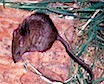 +
 +
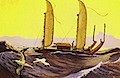 =
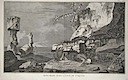 ?
Friday, October 9, 2009
Evolution and the Levels of Selection: Samir Okasha
For anyone interested in the "levels of selection" dimension of evolutionary theory, you should definitely acquire Samir Okasha's book -- Evolution and the Levels of Selection-- 2006, Oxford University Press. Okahsa covers the topic from a philosophic point of view and in a way that gets to the heart of the matter. For me, his coverage of MLS1 and MLS2 models is particularly useful as is the discussion of the Price Equation.

Monday, September 28, 2009
Simon Conway Morris - Lecture on Inevitability of Humans
While there are aspects about "inevitability" that are taken too literally (in that history is constrained because it has *already happened*) and that makes me alert for "woo-woo thinking", there is a good iTunes U lecture by Simon Conway Morris on the constrained design space in which evolution can occur. Conway Morris was the paleontologist that worked on the Burgess Shale fossils (originally collected by Charles Walcott in 1909). His findings provided ample fodder for Stephen Jay Gould to argue for the historical contingency of evolution in Wonderful Life. Ironically, in recent years Conway Morris has argued for something akin to the opposite of this stance: the convergence evolution. Here, he argues that that we are not here by chance: but are inevitable due to the strong structuring dimensions of the physical universe. This is explained in detail in his book Life's Solution: Inevitable Humans in a Lonely Universe.
I think the understanding of design constraints is an important issue, especially for archaeological applications of evolution. We need this concept in order to understand the space in which style can occur versus what is technologically necessary. For example, decoration can vary infinitely yet the vessel upon which it is placed may still have to serve as a fireproof container. Holes cut in the sides are part of that particular design space. Thus, we must be careful to construct classifications within those constraints in order to not confuse analogous similarity with homologous similarity. In many cases, the design space may be far smaller than one might think.
Conway Morris goes a little far here by arguing that the design space for life makes humans inevitable. There are certainly some dimensions of humans that are due to design constraints but distinguishing which are due to historical constrains (i.e., the environment of evolution) and which are due to design constraints (i.e., the chemico-physical dimensions that make us possible) are something to analyze, not to assume a priori.
The lecture is, nonetheless, a good one for thinking about evolution and issues of convergence.
Tuesday, May 26, 2009
ANTH 499: The Anthropology of Zombies
ANTH 499: The Anthropology of Zombies
Instructor:
Dr. Carl Lipo, Associate Professor
Department of Anthropology
Office: PH1 Rm 202
Phone: 562-985-2393
Email: clipo@csulb.edu
Hours:
Class Hours: MW 3:30-4:45 PM
Room: PE1-059
Office Hours: Tuesday 1:30-3:30
Required Textbooks:
Davis, Wade, 1985 The Serpent and the Rainbow. Simon and Schuster.
Brooks, Max 2003. The Zombie Survival Guide: Complete Protection from the Living Dead. Three Rivers Press.
Jane Austen and Seth Grahame-Smith 2009. Pride and Prejudice and Zombies: The Classic Regency Romance – Now With Ultraviolent Mayhem! Quirk Books.
Brooks, Max 2007. World War Z: An Oral History of the Zombie War. Three Rivers Press.
Ewald, Paul 2002 Plague Time: The New Germ Theory of Disease. Anchor.
Cronk, Lee. 1999. That Complex Whole: Culture And the Evolution of Human Behavior. Westview Press.
COURSE DESCRIPTION:
ANTH 499 is an exploration into the phenomenon of the plague of flesh-eating living dead (aka Zombies) that plague our society. This course investigates the history of zombies, the evolutionary processes that lead to the living dead, instances of zombie-ism in the natural world, philosophical issues of consciousness, and the role zombies have played in popular culture. Through readings, films and discussions we will attempt to frame the zombie scourge in historical and evolutionary context and provide insight on how one should deal with this clear and present threat to human life.
As everyone knows, zombies are a major social concern. With millions of infectious flesh-eating undead wandering our streets, it is essential that we construct an academic understanding of zombies. Many of society’s most pressing questions depends on our ability to ask and answer questions about WHY ZOMBIES. Why do they seek to eat living flesh? Why do we make things? What caused their evolution? Why do zombies depend on the flesh of living beings? Are zombies part of a larger unseen natural cycle? Does the insatiable desire for flesh constitute consciousness? What is the history of zombies? What is the role that zombies play in popular culture? Why zombies now? How do zombies impact the structure of our social and economic organization? Determining why zombies (and ourselves) are they way they, and learning about origins provides us a means to understand the nature of zombies and change as well as what we might expect in the future. Answering these questions requires having information about the evolutionary history of zombies – since that history is the ultimate reason WHY we are here. Put simply, we are here because zombies exist and have reproduced.
In the Anthropology of Zombies, we will examine how anthropology is able to address some of the key why questions linked to the nature of zombie existence: the origin of our species, origins of zombies, zombie society, zombie culture, zombie biology, zombie philosophy, etc.. We will also examine common approaches used by anthropologists to study zombies. In particular, we will explore how anthropology is a discipline that uses an evolutionary conceptual framework for explaining our zombie origins. This framework is the basis of the zombie sciences, a realm of the sciences dedicated to the study of the major why zombie questions. It is distinct from the non-zombie sciences such as physics and chemistry. The zombie sciences build explanations that account for patterns of zombies and culture change through time and across space. While subject matter may vary, zombie scientists share explanatory frameworks and make use of measurements of the empirical world – a framework in common with evolutionary biology, evolutionary philosophy and other evolutionary disciplines. In anthropology, this consists of the zombie horde – the undead, their behavior, their culture, their biology and their spatial relations. Measurements of zombies are recorded in the field and laboratory by instruments and analytical techniques developed in the physical sciences, yet explained within the zombie paradigm.
This course will include lectures and material that will permit you to:
· Comprehend the difference between scientific and pseudo-scientific understanding of the zombies;
· Know how physical-science techniques, such as molecular biology, have contributed to the development of a zombie science;
· Be able to identify and illustrate the scientific tools that anthropology has developed on its own in order to produce knowledge about zombies that is falsifiable;
· Be able to apply the basic principles of measurement and quantification used in zombie studies;
· Comprehend the evolutionary processes that shaped zombie history and biology
· Be able to summarize the major changes in zombie-ism that has occurred over the past 6 million years;
· Understand why zombies occur in the natural world;
· Be able to explain the role of zombies in popular culture;
· Discuss the differences between consciousness and mindlessness;
· Track notions such as zombies in popular culture through time and space.
You will have succeeded in this course when you are able to:
1. Contribute to the class discussion of assigned topics, current zombie events, zombie literature, and classroom exercises.
2. Distinguish zombie science from stories and demonstrate an understanding of how science works in the study of the zombies.
3. Demonstrate knowledge of zombie methods, theories, science, analytic techniques, zombie management, and zombie stewardship on the midterm exam.
4. Incorporate an understanding of zombies in the context of disease and the evolution of coevolutionary relationships.
5. Analyze details of important features of zombies worldwide, describing major transitions in zombies and how this knowledge is important for modern humans.
6. Demonstrate writing skills on assignments that indicate good preparation and organization.
7. Discuss the value of zombies to your own life and to modern society.
STRUCTURE OF THE COURSE
The course meets two times a week: Mondays and Wednesdays @3:30-4:45. Class announcements, additional reading, and assignments will be posted on BeachBoard (http://beachboard.csulb.edu). All class assignments must be turned in on time. Late assignments, without a valid reason for absence (see below) will be accepted, but count for no more than 50% of the full value.
GRADING
A traditional grading scheme will be used (>90%=A, 80-89%=B, 70-79%=C, 60-69%=D, <60%=F). Your grade will be based on four separate components:
Attendance and In-Class Activities (15%)
Attendance is required for this class. Attendance will be evaluated through discussions, attendance roll, in-class exercises, assignments and quizzes. The standard University criteria for absences will be used. Valid excuses consist of (1) Illness or injury to the student, (2) death, injury or a serious illness of an immediate family member or the like due to zombies, (3) religious reasons (4) jury duty or government obligations in zombie defense, (5) university sanctioned or approved activities (examples include: artistic performances, forensics presentations, participation in research conferences, intercollegiate athletic activities, zombie hunting, student government, required class field trips, etc.), (6) zombie attacks. When any of these reasons directly conflict with class meeting times, students are responsible for informing faculty members of the reason for the absence and for arranging to make up missed assignments, tests, quizzes, and class work insofar as this is possible. Evidence of zombie attacks may be requested. Note per University policy, faculty members are not obligated to consider other non-zombie related absences as excused.
Film Discussion (25%)
There will be five film exercises during the semester. These films will be made available at the library for you to watch in advance. You must watch the films in advance. On the lecture days corresponding to the films we will view key scenes and discuss the major points made in each. Film discussion write ups are due the Monday following the filmsand are worth 5% each for a total of 25% of your grade.
3/15 Dawn of the Dead
3/22 Day of the Dead
3/29 Shaun of the Dead
4/5 28 Days Later
4/19 28 Weeks Later
Evening Lectures (10%)
During the course of the semester there will be three evening lectures given by internationally-known zombie specialists. The lectures will be held off-campus – at the Aquarium of the Pacific in downtown Long Beach. Each of these individuals is an engaging speaker who will be discussing a zombie topic that we will also cover in class. The talks begin @7:00PM and will be followed by a reception at the aquarium so that you can talk with the speakers. The schedule of the talks is:
- Wed., Feb. 1: Dr. Paul Ewald, Evolutionary Studies of Disease
- Wed., March 8: Dr. Lawrence Gilbert, Zombie Ants
- Mon., March 27: Max Brooks, The Zombie Plague and What You Can Do About It.
You are required to attend at least one of these lectures. For this lecture (your choice) you must provide a type-written, brief summary and critique of the talk. This critique should examine whether the author is able to say something about the past in a scientific manner – what evidence and theory are they using to make their zombie points? This paper is due 24 April. The paper must be 2-3 pages, double-spaced, typed, and in a professional format. LATE PAPERS WILL NOT ACCEPTED. E-mailed papers are not accepted.
Mid-Term Exam (25%)
There will be a mid-term exam on Monday, March 1st. This exam will include essay-type questions on zombie issues as well as so-called objective questions, and will cover assigned readings for that time period as well as lectures and other class materials. There will be NO makeup exams except in fully documented serious circumstances.
Final Exam (25%)
There will be a final exams scheduled during the final period, April 24 @2:45 – 4:45PM. This exam will include essay-type questions as well as so-called objective questions, and each will cover assigned readings for that time period as well as lectures and other class materials. The final will be cumulative to a small degree in that you will need to know the basic concepts of zombies to explain the natural world.
SUMMARY SCHEDULE OF ASSIGNMENTS
· 15 Feb: Exercise 1 Due
· 1 March: Midterm Exam
· 24 April: Zombie Lecture Paper Due
· 18 May: Final exam
Throughout entire class: Class participation, in class quizzes, discussion and knowledge of readings, laboratories, etc.
FINAL GRADE CALCULATION
25% = Midterm exam
10% = Lecture Report
25% = Laboratories
25% = Final exam
15% = Class Participation, exercises, quizzes, including class discussion
----------------
100% (+10% extra credit possible)
SCHEDULE
|
Date |
Topic |
Reading |
Week 1: 1/25
|
1/25 |
Zombie: Introduction and overview |
Week 2: 1/30 & 2/1
|
Monday |
1/30 |
What are Zombies? Origins, science and zombies: How can we get answers to the past?
|
Brook 2002: 1-43 |
|
Wednesday |
2/1 |
Science and Pseudo-science: How can we distinguish zombie pseudo-science from science? |
Cronk: 1-90 |
Week 3: 2/6 & 2/8
|
Monday |
2/6 |
Hoaxes and Zombies Zombies and the scientific method. |
Cronk: 91-200 |
|
Wednesday |
2/15 |
MOVIE: Dawn of the Dead Exercise 1 due in class |
Week 4: 2/13 & 2/15
|
Monday |
2/9 |
Zombies · Biology · Behavior · Explanations of the zombies · Functional · Historical |
Brooks 2007: 1-99 |
|
Wednesday |
2/11 |
Zombies, Evolution and Science |
Week 5: 2/20 (Presidents’ Day) & 2/22
|
Monday |
2/20 |
NO CLASS – Presidents’ Day – Campus Closed |
|
|
2/22 |
MOVIE: Day of the Dead |
Brooks 2002-50-199 |
Week 6: 2/27 & 3/1
|
Monday |
2/27 |
Zombie origins: Where do zombies come from? · Evolution · Coevolution · Historical evidence · The First zombies and culture |
Cronk 1999: 101-187 |
|
Wednesday |
3/1 |
Midterm Exam |
|
Monday |
3/6 |
Evolution of Infectious Diseases |
Ewald: 1-204 |
|
Wednesday |
3/8 |
Zombies in the Natural World Zombie Ants Schizophrenia |
Ewald: 205-324 |
Week 8: 3/13 & 3/15
|
Monday |
3/13 |
How did zombies get to the New World? |
Brooks 2007:190-321 |
|
Wednesday |
3/15 |
FILM: Shaun of the Dead |
Week 9: 3/20 & 3/22
|
Monday |
3/20 |
Zombies in Literature
|
Austen and Grahame-Smith: 1-204 |
|
3/22 |
MOVIE: 28 Days Later |
Week 10: 3/27 & 3/29
|
Monday |
3/27 |
The Rise of “Zombie Culture”
|
Austen and Grahame Smith: 205-328 Cronk 200-397 Davis (all) |
|
3/29 |
Traditional Zombies in Haiti |
|
Week 11: 4/3 & 4/5
|
Monday |
4/3 |
Philosophy of Consciousness Are Zombies Conscious? |
Cronk: 144-165 |
|
Wednesday |
4/5 |
LAB: Left 4 Dead |
SPRING BREAK 4/10 to 4/14
Week 12: 4/17 & 4/19
|
Monday |
4/17 |
The future: Preparing for Zombies Defense and Offense |
Brooks 2007: 211-391 |
|
Wednesday |
4/19 |
LAB: Left 4 Dead Playoffs |
FINAL EXAM:
Final Exam is scheduled 2:45 – 4:45 Wednesday, April 24.
Cheating and Plagiarism: Plagiarism is using the words and/or the ideas of another person without giving them credit. This is academic zombie-ism. Plagiarism and cheating are serious academic offenses. Read the section on cheating and plagiarism in the CSULB catalog, and note that faculty are free to take a wide range of actions in cases of cheating and plagiarism. If you are caught cheating or plagiarizing in this course, you will experience severe consequences with the undead.
Withdrawal Policy: Please keep in mind that you are held responsible for completion of every course for which you register or for withdrawing during the first two weeks of classes from courses that you do not intend to complete. You may pick up a copy of the CSULB withdrawal policy, as well as withdrawal forms, in the Anthropology Department office.
Miscellaneous: Please notify me in advance if you require accommodation for a disability (it is your responsibility to do so). The information provided in this syllabus is subject to change.
Subscribe to:
Posts (Atom)